Stretch 2nd Edition (PDFs, Resources)
Level Starter (A1)
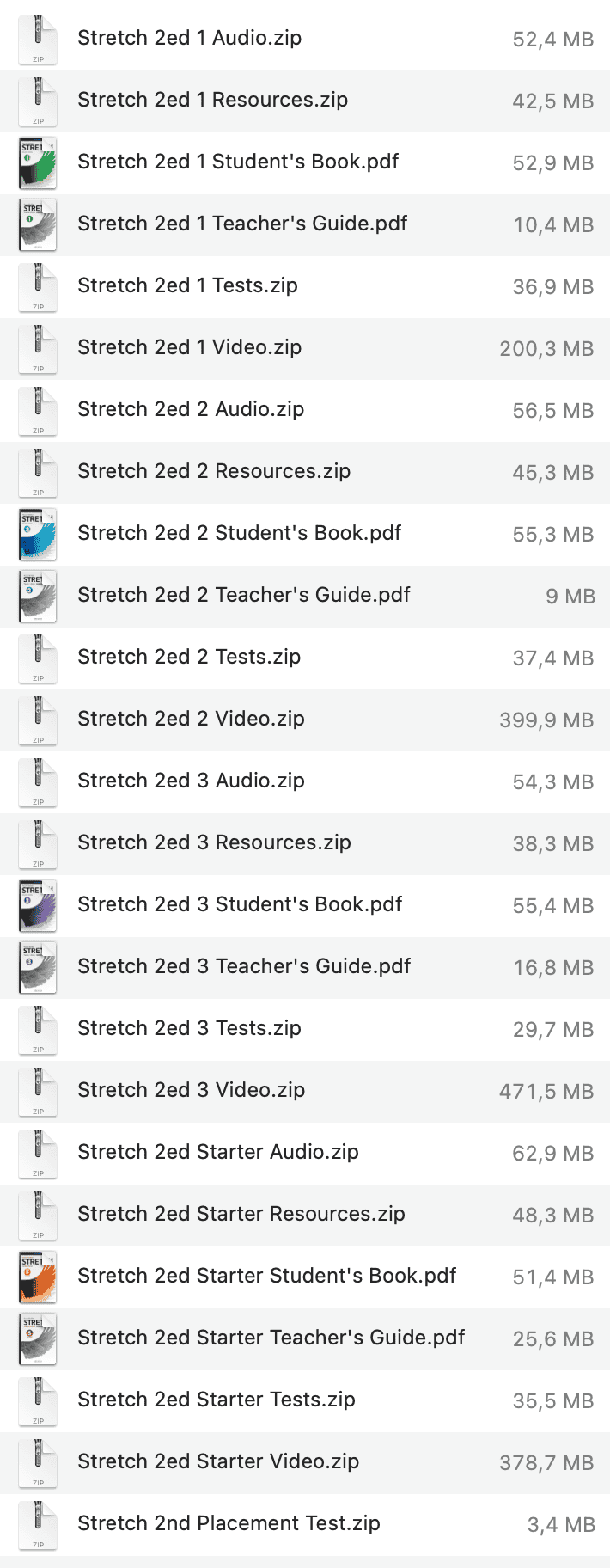
Stretch 2ed Starter Audio.zip
Stretch 2ed Starter Resources.zip
Stretch 2ed Starter Student’s Book.pdf – Sample: Click
Stretch 2ed Starter Teacher’s Guide.pdf – Sample: Click
Stretch 2ed Starter Tests.zip
Stretch 2ed Starter Video.zip
Stretch 2nd Placement Test.zip
Level 1 (A1+)
Stretch 2ed 1 Audio.zip
Stretch 2ed 1 Resources.zip
Stretch 2ed 1 Student’s Book.pdf – Sample: Click
Stretch 2ed 1 Teacher’s Guide.pdf – Sample: Click
Stretch 2ed 1 Tests.zip
Stretch 2ed 1 Video.zip
Level 2 (A2)
Stretch 2ed 2 Audio.zip
Stretch 2ed 2 Resources.zip
Stretch 2ed 2 Student’s Book.pdf – Sample: Click
Stretch 2ed 2 Teacher’s Guide.pdf – Sample: Click
Stretch 2ed 2 Tests.zip
Stretch 2ed 2 Video.zip
Level 3 (B1)
Stretch 2ed 3 Audio.zip
Stretch 2ed 3 Resources.zip
Stretch 2ed 3 Student’s Book.pdf – Sample: Click
Stretch 2ed 3 Teacher’s Guide.pdf – Sample: Click
Stretch 2ed 3 Tests.zip
Stretch 2ed 3 Video.zip
Giới thiệu “Stretch 2nd Edition” của Oxford
| ✅ Bộ giáo trình: | Stretch 2nd Edition |
| ✅ Nhà xuất bản: | Oxford University Press |
| ✅ Levels: | A1, A2, B1 |
| ✅ Ngôn ngữ: | American English |
| ✅ Kỹ năng: | Speaking |
| ✅ Dành cho: | Adult, High School |
| ✅ Năm xuất bản: | 2025 |
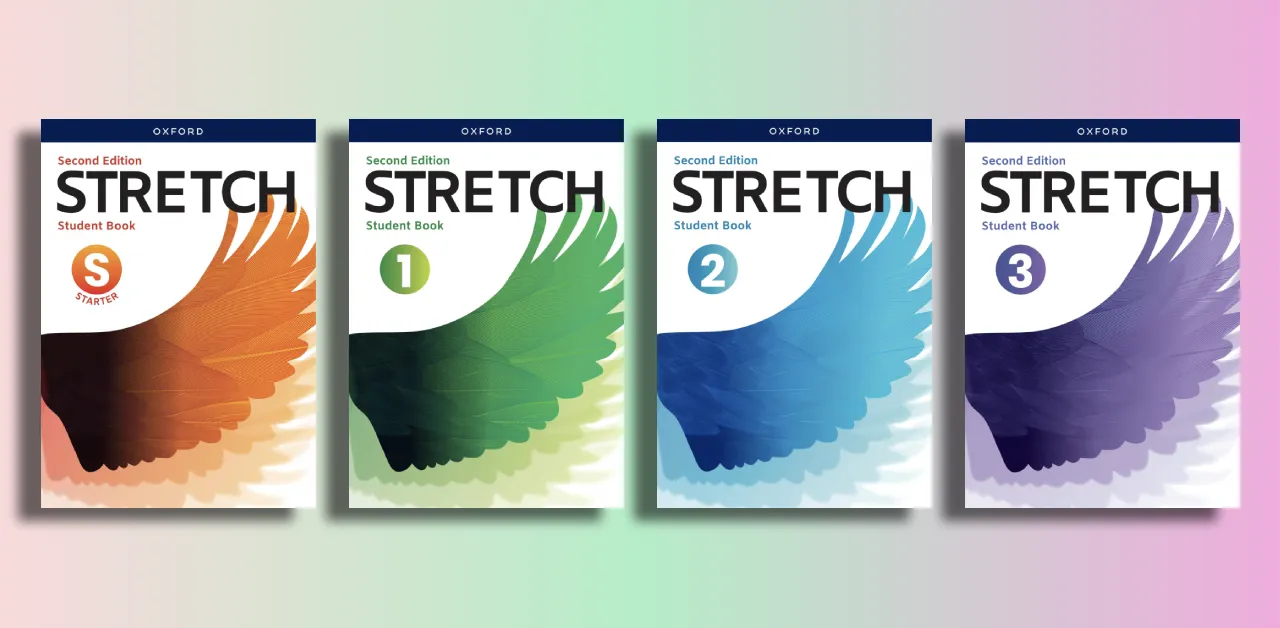
Stretch Second Edition is a four-level American English course from Oxford University Press designed for young adult and adult learners. Covering levels from CEFR A1 to B1, the series helps students develop the language, confidence, and communication strategies needed for personal, academic, and professional situations.
While many general English courses teach speaking as one skill among several, Stretch Second Edition places spoken communication at the center of the learning process. Carefully structured speaking tasks, practical pronunciation work, presentation training, video-based lessons, and global skills activities give learners frequent opportunities to express ideas clearly and interact more confidently.
The result is a balanced course that develops grammar, vocabulary, listening, reading, and writing while consistently moving students toward a more important goal: using English effectively in the real world.
Stretch Second Edition at a Glance
| Publisher | Oxford University Press |
|---|---|
| Target learners | Young adults and adults |
| Number of levels | 4 levels: Starter, Level 1, Level 2, and Level 3 |
| CEFR range | A1–B1 |
| Type of English | American English |
| Core focus | Speaking, presenting, video comprehension, and global skills |
| Additional skills | Listening, reading, writing, grammar, vocabulary, and pronunciation |
| Digital learning | Online Practice and digital course components |
What Is Stretch Second Edition?
Stretch Second Edition is an integrated-skills English course created for learners who need more than grammatical knowledge. It recognizes that successful communication depends on several abilities working together: understanding other people, organizing ideas, selecting suitable language, speaking with sufficient clarity, responding appropriately, and adapting communication to different contexts.
The course therefore combines systematic language development with meaningful communication. Students study vocabulary and grammar, but they are regularly asked to use that language in conversations, collaborative tasks, presentations, written responses, and discussions of real-world topics.
This practical orientation is especially relevant for students moving from secondary education into university, further study, or employment. At this stage, learners may understand basic English but still find it difficult to participate in discussions, explain an opinion, deliver a presentation, or speak without extensive preparation. Stretch Second Edition provides a structured bridge between knowing English and using it confidently.
Stretch Second Edition Levels and CEFR Alignment
The series contains four progressively challenging levels. Together, they cover the journey from elementary communication at A1 to more independent language use at B1.
| Course Level | Language Level | CEFR | Approximate Teaching Time |
|---|---|---|---|
| Starter | Elementary | A1 | Approximately 110 hours |
| Level 1 | Pre-intermediate | A2 | Approximately 110 hours |
| Level 2 | Pre-intermediate to Intermediate | A2–B1 | Approximately 110 hours |
| Level 3 | Intermediate | B1 | Approximately 110 hours |
This level structure allows schools and language centers to build a continuous learning pathway. It also gives teachers sufficient flexibility to place students according to their existing proficiency rather than relying only on age or school year.
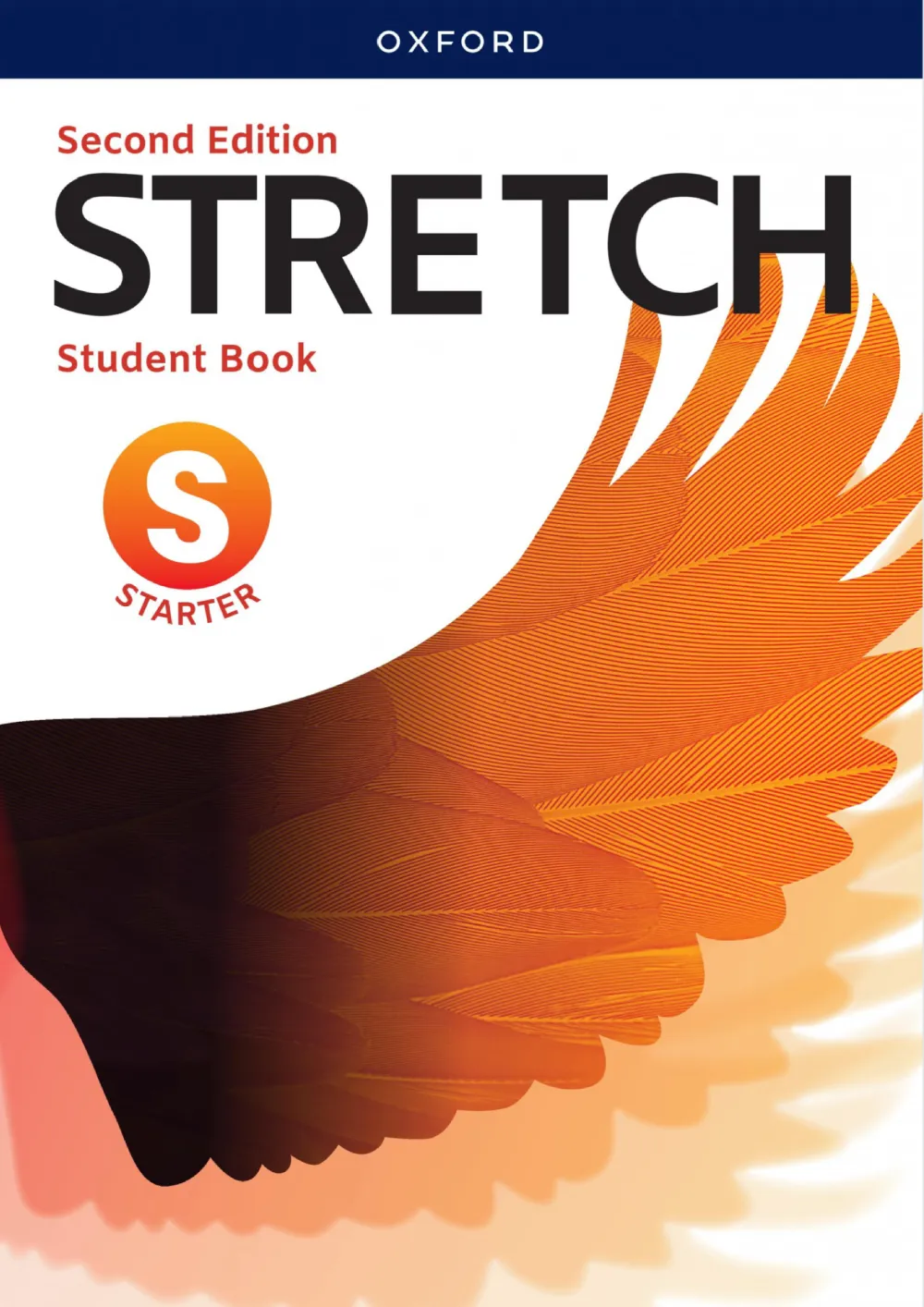
Stretch 2nd Edition Starter Student Book
Key Features of Stretch Second Edition
1. A Strong Focus on Speaking Fluency
Speaking development is one of the defining strengths of Stretch Second Edition. Students do not simply read model conversations and repeat them. They learn how communication works and then apply that understanding in increasingly independent tasks.
Speaking lessons include practical communication strategies, useful expressions, model dialogues, pronunciation support, and opportunities for personalization. These elements help learners manage common conversational situations, such as asking for clarification, showing interest, giving additional information, responding politely, explaining reasons, and maintaining an exchange.
This approach is pedagogically valuable because fluency does not develop from vocabulary knowledge alone. Learners also need familiar language patterns and interaction strategies that reduce the cognitive pressure of speaking. By repeatedly practicing these patterns in meaningful situations, students can respond more naturally and with greater confidence.
2. Systematic Presentation Skills Development
Presentation skills are often introduced only at higher language levels. Stretch Second Edition takes a different approach by developing them gradually from the beginning of the course.
Students learn how to focus a presentation, organize information, explain ideas in a logical sequence, use visuals, connect points, speak at an appropriate volume, and communicate with an audience. Shorter presentation activities allow frequent practice, while more substantial Presenting Practice lessons guide learners through a complete process.
This process may include:
- Understanding a model presentation
- Identifying the presentation technique being demonstrated
- Planning and organizing ideas
- Receiving input from classmates
- Practicing or recording the presentation
- Presenting to the class
- Giving and receiving constructive feedback
- Reflecting on performance
The emphasis on planning, feedback, and reflection makes presentations manageable even for learners who initially feel nervous about speaking in front of others. It also develops transferable skills that can be used in university seminars, workplace meetings, interviews, and professional presentations.
3. Structured Speaking Tasks That Build Confidence
The course uses carefully staged activities rather than asking learners to speak without preparation. Students first encounter relevant vocabulary and language models, examine how the target communication strategy works, practice with support, and then apply the language more freely.
This progression is important for mixed-ability classrooms. Less confident students receive enough structure to participate successfully, while stronger students can expand their responses and use the tasks more creatively.
The approach also helps create visible progress. Learners can move from short controlled exchanges to longer conversations and presentations without feeling that the difficulty has increased too suddenly.
4. Understanding Video and Video-Based Learning
Video plays an important role in contemporary communication, education, and professional life. Stretch Second Edition reflects this reality through dedicated Understanding Video and Video & Global Skills lessons.
Rather than using video only as entertainment, the course teaches learners how to process audiovisual information. Students may identify main ideas, listen for key details, recognize the order of events, use visual clues, distinguish fact from opinion, or consider the purpose and perspective of a video.
These activities strengthen listening comprehension while developing the broader media literacy required in modern learning environments. They also expose students to different speakers, contexts, cultures, and communication styles.
5. Global Skills for Study, Work, and Everyday Life
Language education is most effective when it prepares learners to participate in the wider world. Stretch Second Edition therefore integrates global skills alongside traditional language content.
Depending on the lesson and level, learners may practice:
- Critical thinking
- Creativity
- Collaboration
- Intercultural competence
- Digital literacy
- Giving constructive feedback
- Evaluating information
- Recognizing different perspectives
- Reflecting on personal performance
These skills are not treated as isolated theory. They appear within communicative activities, reading tasks, projects, video lessons, and presentations. Students therefore learn to apply them while using English for a clear purpose.
6. Meaningful Intercultural Learning
Communication across cultures requires more than accurate vocabulary and grammar. Learners need to understand that people may organize information, interact, express opinions, and respond to situations differently.
Stretch Second Edition introduces intercultural themes through accessible topics and classroom discussion. Learners compare experiences, explore customs, consider other perspectives, and make connections between their own culture and the cultures represented in the course.
This creates a more thoughtful form of language learning. Instead of viewing English as a collection of fixed rules, students begin to see it as a tool for communicating with people from a wide range of backgrounds.
7. Practical Pronunciation Support
Pronunciation work is integrated into speaking lessons rather than separated from communication. Learners practice features that directly affect intelligibility and fluency, including sentence stress, word stress, contractions, linking, reductions, and question intonation.
The objective is not to eliminate a learner’s accent. The more realistic educational goal is to help students speak clearly, recognize common features of natural spoken English, and feel more comfortable when interacting with others.
Connecting pronunciation practice to useful conversations makes it easier for learners to transfer these features into spontaneous speech.
8. Balanced Grammar and Vocabulary Development
Although Stretch Second Edition is strongly communication-focused, it does not neglect language accuracy. Each level provides systematic grammar and vocabulary development that supports the communicative goals of the unit.
Grammar is presented in context and followed by controlled practice, pair work, and opportunities for personalized use. Vocabulary is connected to practical themes and reinforced through listening, speaking, reading, and writing.
This integrated design helps students understand not only what a grammar structure means, but also when and why it is used. It reduces the common gap between completing grammar exercises successfully and applying the same language during real communication.
9. Collaboration, Feedback, and Reflection
Stretch Second Edition promotes a classroom culture in which learners participate actively in each other’s development. Pair work, group activities, peer feedback, and reflection tasks encourage students to listen carefully, exchange ideas, and evaluate communication constructively.
Feedback activities are especially useful in presentation lessons. Instead of receiving evaluation only from the teacher, students learn to notice effective communication in their classmates’ work. This strengthens audience awareness and helps learners understand assessment criteria more clearly.
Reflection tasks also support learner autonomy. Students consider what they did successfully, where they experienced difficulty, and what they can improve during the next task.
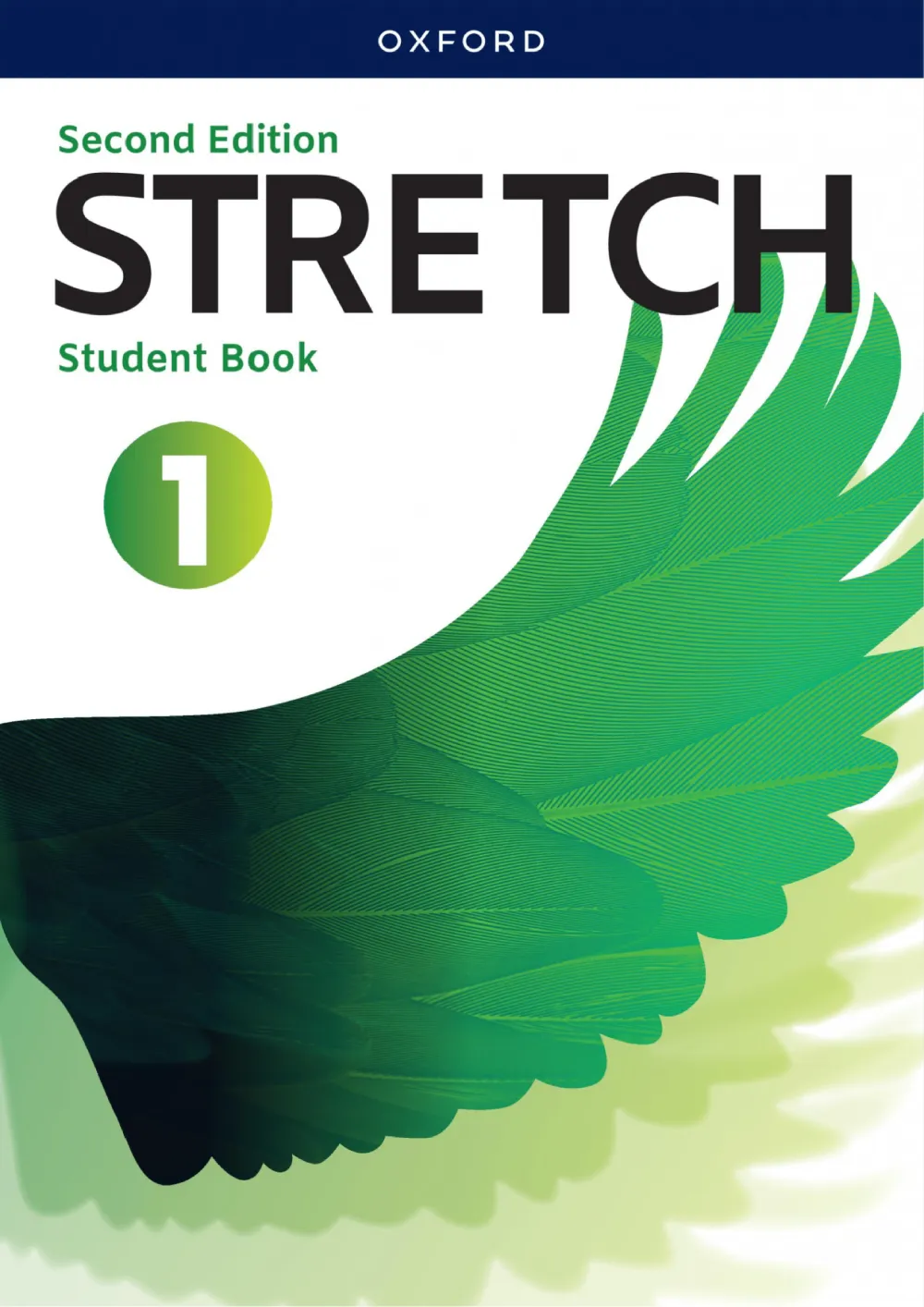
Stretch 2nd Edition 1 Student Book
How a Typical Unit Supports Learning
A unit in Stretch Second Edition brings together receptive skills, language systems, communication, and productive outcomes. Although lesson sequencing may vary across the series, learners typically work through a coherent progression that includes:
- Vocabulary and listening: Students learn topic-related language and practice a specific listening strategy.
- Speaking and pronunciation: Learners study a practical communication strategy, useful expressions, and relevant pronunciation features.
- Grammar: Target structures are presented in context and practiced through supported and communicative activities.
- Reading and speaking: Students develop reading strategies and discuss the ideas in the text.
- Presenting or video work: Learners develop presentation techniques or audiovisual comprehension and global skills.
- Writing: Students produce a written response connected to the unit topic and language.
- Review and self-assessment: Learners consolidate key content and evaluate their progress.
This predictable structure reduces unnecessary cognitive load. Students understand the purpose of each stage and can concentrate more fully on language development and communication.
Online Practice and Digital Learning
Stretch Second Edition is supported by Oxford digital components, including Online Practice. These resources extend learning beyond the classroom and provide additional opportunities to review vocabulary, grammar, listening, pronunciation, and other course content.
Online practice is particularly valuable for blended learning. Teachers can use classroom time for interaction, collaboration, discussion, and presentations while assigning selected consolidation activities for independent study.
Digital resources may also help learners work at a more suitable pace. Students who need additional reinforcement can repeat activities, while more confident learners can use the material to review and consolidate their knowledge independently.
Stretch Second Edition Course Components
The range of components may vary according to the country, institution, and package selected. Core options include:
For Students
- Student Book with Online Practice
- Student Digital Pack with e-book and Online Practice
- Student Book and digital learning combinations available for selected markets
For Teachers
- Teacher’s Guide with Digital Pack
- Teacher Digital Pack
- Classroom presentation and teaching resources for supported course packages
- Digital materials for presenting lessons and managing classroom practice
Before selecting a package, schools and teachers should confirm which print and digital components are available in their market and whether access codes are included with the chosen edition.
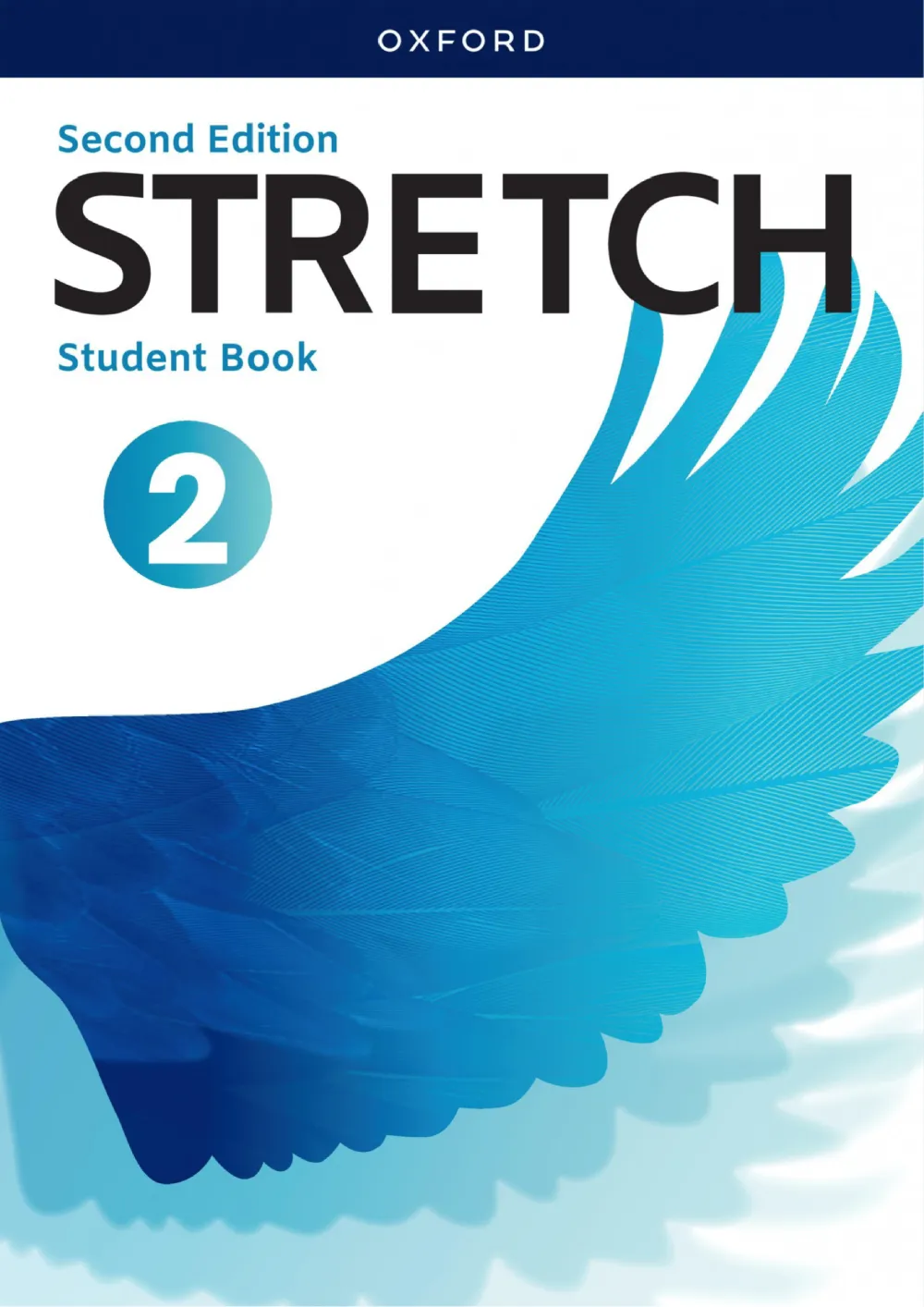
Stretch 2nd Edition 2 Student Book
Who Is Stretch Second Edition Best For?
Stretch Second Edition is particularly suitable for:
- Young adults preparing for university or further education
- Adult learners developing practical communication skills
- Students who understand grammar but lack confidence in speaking
- Language centers offering American English programs
- University foundation or general English courses
- Programs that prioritize presentations and academic communication
- Blended-learning courses combining classroom teaching with online practice
- Learners who need English for personal, academic, and professional situations
The course is less narrowly exam-focused than a dedicated test-preparation series. Its main strength lies in developing transferable communication skills. However, the listening strategies, reading skills, language accuracy, and spoken fluency developed throughout the course can provide a useful foundation for later examination preparation.
Benefits for Learners
For students, the greatest advantage of Stretch Second Edition is the connection between classroom learning and real communication. Learners are not expected to become confident speakers immediately. They are given models, planning time, useful language, repeated practice, feedback, and opportunities to reflect.
Over time, this process can help learners:
- Speak for longer without depending heavily on memorized scripts
- Organize ideas more clearly
- Use practical expressions during conversations
- Understand a wider range of spoken and video content
- Deliver structured presentations
- Collaborate more effectively with classmates
- Respond to feedback constructively
- Become more independent and reflective learners
Benefits for Teachers and Institutions
For teachers, the course provides a clear instructional framework while still allowing room for adaptation. Structured tasks reduce preparation demands, and the progression from input to supported practice and freer communication helps teachers manage classes with different confidence levels.
The course also gives institutions a coherent four-level pathway. Its combination of language instruction, communication, digital learning, presentations, and global skills aligns well with programs seeking broader educational outcomes than grammatical mastery alone.
Because each level provides substantial teaching content, the series can support intensive courses, semester-based programs, or longer academic pathways depending on the institution’s timetable.
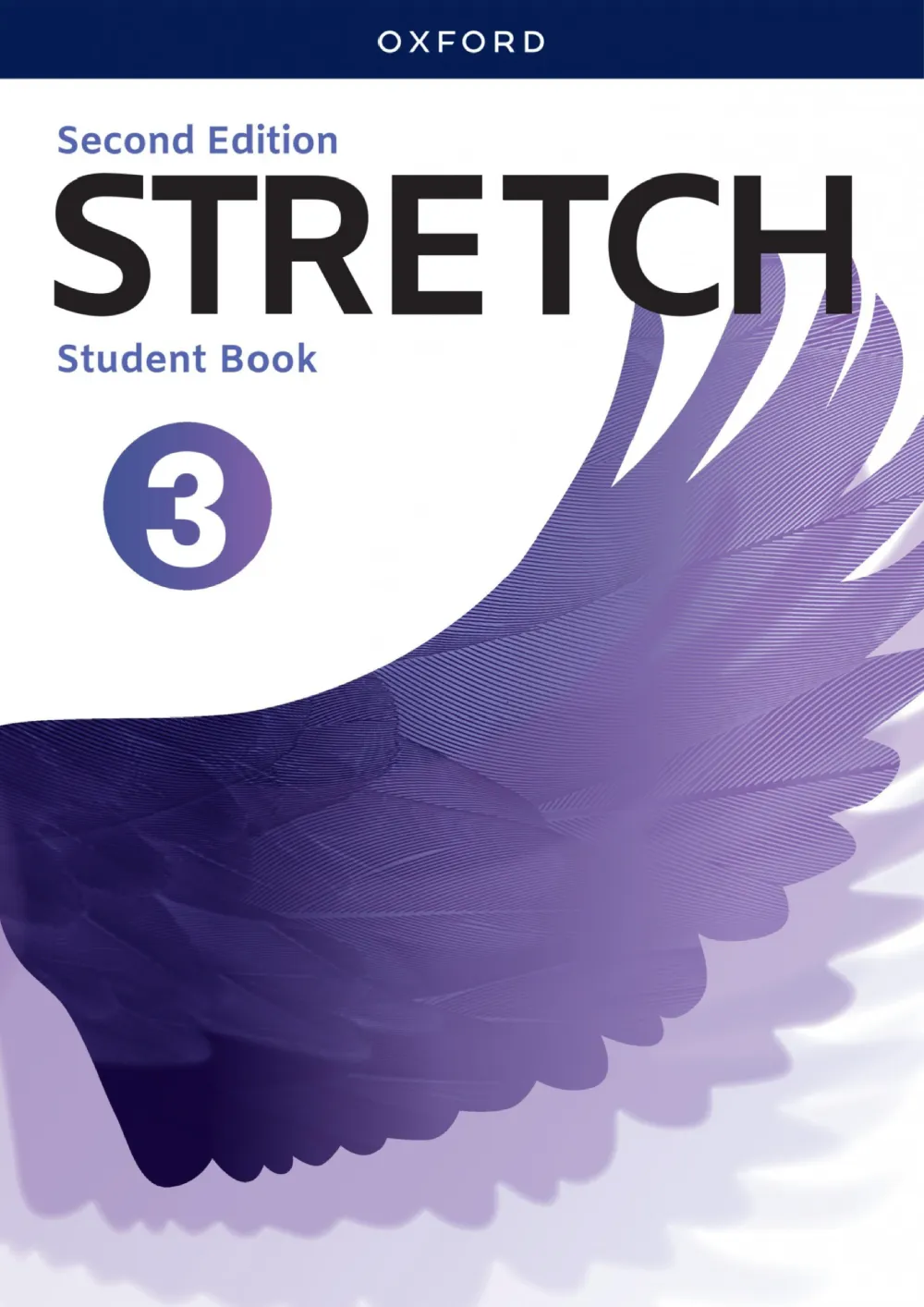
Stretch 2nd Edition 3 Student Book
What Makes the Second Edition Different?
Stretch Second Edition strengthens the elements that modern learners increasingly need. Speaking tasks are more carefully structured, presentation development receives dedicated attention, and video is used to teach both comprehension and wider global skills.
The second edition also places greater emphasis on peer learning, constructive feedback, self-reflection, intercultural competence, and digital literacy. These developments make the course relevant to contemporary classrooms in which learners are expected to communicate, collaborate, analyze information, and present ideas across both physical and digital environments.
Frequently Asked Questions
Is Stretch Second Edition American or British English?
Stretch Second Edition teaches American English. Its vocabulary, pronunciation models, spelling conventions, and language examples are based primarily on American usage.
How many levels are included in Stretch Second Edition?
The course includes four levels: Starter, Level 1, Level 2, and Level 3.
What CEFR levels does the course cover?
The complete series covers approximately CEFR A1 to B1. Starter begins at A1, while Level 3 reaches B1.
Does Stretch Second Edition cover all four English skills?
Yes. The course develops listening, speaking, reading, and writing, together with grammar, vocabulary, pronunciation, presentation skills, video comprehension, and global skills. Speaking and presenting receive particularly strong attention.
Is Stretch Second Edition suitable for self-study?
The Student Book and Online Practice can support independent review, but the course is most effective when learners can participate in conversations, presentations, collaborative tasks, and feedback activities with a teacher or other students.
Is the course suitable for university students?
Yes. Its focus on spoken communication, presentations, collaboration, video comprehension, and global skills makes it especially relevant for learners preparing for or entering university education.
Does the course include online learning?
Yes. Student packages with Online Practice and digital components are available. The exact resources and access options may vary by market and product package.
Final Evaluation
Oxford Stretch Second Edition is a thoughtfully designed general English course for learners who need to move beyond passive knowledge and become more capable communicators. Its four-level progression provides a solid foundation in grammar, vocabulary, listening, reading, and writing, while its strongest contribution is the systematic development of speaking and presentation skills.
By combining structured communication tasks, pronunciation support, video comprehension, global skills, collaboration, feedback, and reflection, the series prepares learners for the kinds of communication they are likely to encounter beyond the language classroom.
For schools, universities, language centers, and independent teachers seeking an American English course from A1 to B1, Stretch Second Edition offers a modern and practical pathway toward greater fluency, confidence, and communicative independence.