Q Skills for Success 4th Edition Listening and Speaking
Intro (A1)
Q Skills for Success 4th Intro L&S Answer Key.pdf
Q Skills for Success 4th Intro L&S Assessment.zip
Q Skills for Success 4th Intro L&S Audio.zip
Q Skills for Success 4th Intro L&S Other Resources.zip
Q Skills for Success 4th Intro L&S Student Book.pdf – Sample: Click
Q Skills for Success 4th Intro L&S Teacher’s Guide.pdf – Sample: Click
Q Skills for Success 4th Intro L&S Video.zip
Q Skills for Success 4th Intro L&S Worksheets.zip
Level 1 (A2)
Q Skills for Success 4th 1 L&S Answer Key.pdf
Q Skills for Success 4th 1 L&S Assessment.zip
Q Skills for Success 4th 1 L&S Audio.zip
Q Skills for Success 4th 1 L&S Other Resources.zip
Q Skills for Success 4th 1 L&S Student Book.pdf – Sample: Click
Q Skills for Success 4th 1 L&S Teacher’s Guide.pdf – Sample: Click
Q Skills for Success 4th 1 L&S Video.zip
Q Skills for Success 4th 1 L&S Worksheets.zip
Level 2 (B1)
Q Skills for Success 4th 2 L&S Answer Key.pdf
Q Skills for Success 4th 2 L&S Assessment.zip
Q Skills for Success 4th 2 L&S Audio.zip
Q Skills for Success 4th 2 L&S Other Resources.zip
Q Skills for Success 4th 2 L&S Student Book.pdf – Sample: Click
Q Skills for Success 4th 2 L&S Teacher’s Guide.pdf – Sample: Click
Q Skills for Success 4th 2 L&S Video.zip
Q Skills for Success 4th 2 L&S Worksheets.zip
Level 3 (B1+ / B2)
Q Skills for Success 4th 3 L&S Answer Key.pdf
Q Skills for Success 4th 3 L&S Assessment.zip
Q Skills for Success 4th 3 L&S Audio.zip
Q Skills for Success 4th 3 L&S Other Resources.zip
Q Skills for Success 4th 3 L&S Student Book.pdf – Sample: Click
Q Skills for Success 4th 3 L&S Teacher’s Guide.pdf – Sample: Click
Q Skills for Success 4th 3 L&S Video.zip
Q Skills for Success 4th 3 L&S Worksheets.zip
Level 4 (B2)
Q Skills for Success 4th 4 L&S Answer Key.pdf
Q Skills for Success 4th 4 L&S Assessment.zip
Q Skills for Success 4th 4 L&S Audio.zip
Q Skills for Success 4th 4 L&S Other Resources.zip
Q Skills for Success 4th 4 L&S Student Book.pdf – Sample: Click
Q Skills for Success 4th 4 L&S Teacher’s Guide.pdf – Sample: Click
Q Skills for Success 4th 4 L&S Video.zip
Q Skills for Success 4th 4 L&S Worksheets.zip
Level 5 (C1)
Q Skills for Success 4th 5 L&S Answer Key.pdf
Q Skills for Success 4th 5 L&S Assessment.zip
Q Skills for Success 4th 5 L&S Audio.zip
Q Skills for Success 4th 5 L&S Other Resources.zip
Q Skills for Success 4th 5 L&S Student Book.pdf – Sample: Click
Q Skills for Success 4th 5 L&S Teacher’s Guide.pdf – Sample: Click
Q Skills for Success 4th 5 L&S Video.zip
Q Skills for Success 4th 5 L&S Worksheets.zip
๏ Q Skills for Success 4th Edition Reading & Writing: Click here
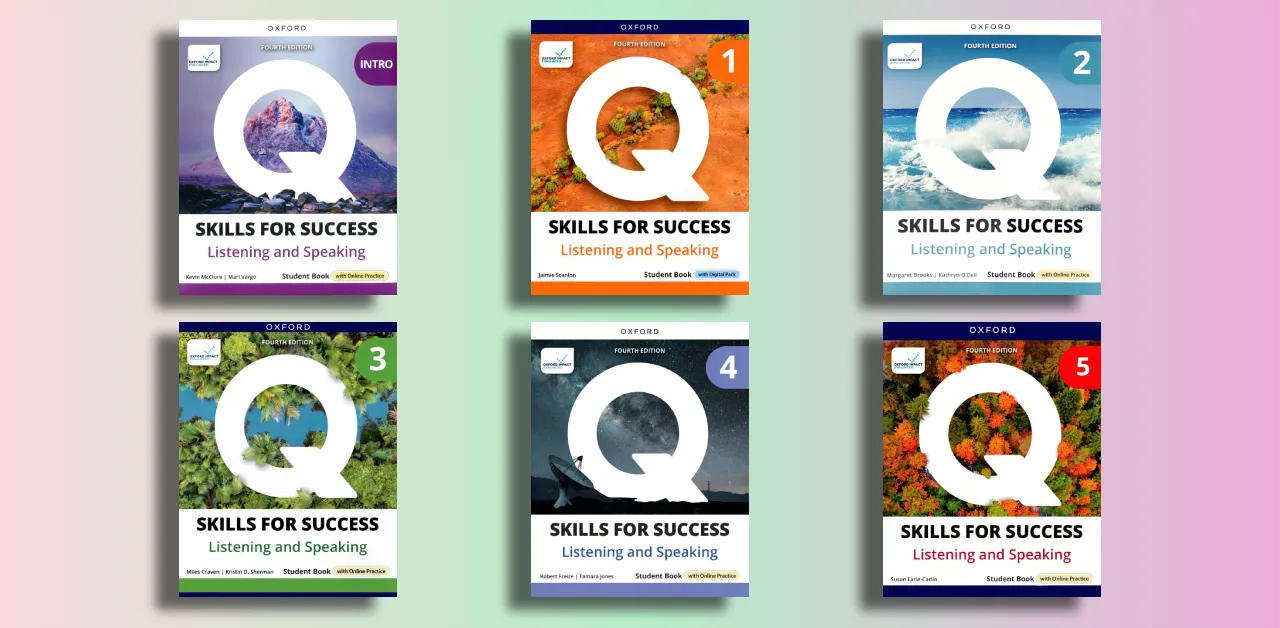
Giới thiệu “Q Skills for Success Fourth Edition Listening and Speaking”
| ✅ Bộ giáo trình: | Q Skills for Success Fourth Edition |
| ✅ Tác giả: | Jennifer Bixby, Joe McVeigh, Kevin McClure, Mari Vargo, Sarah Lynn, Jaimie Scanlon, Margaret Brooks, Kathryn O’Dell, Colin S. Ward, Margot F. Gramer, Miles Craven, Kristin D. Sherman, Debra Daise, Charl Norloff, Robert Freire, Tamara Jones, Nigel A. Caplan, Scott Roy Douglas, Susan Earle-Carlin. |
| ✅ Nhà xuất bản: | Oxford University Press |
| ✅ Levels: | A1, A2, B1, B2, C1 (Beginner to Advanced) |
| ✅ Ngôn ngữ: | American English |
| ✅ Kỹ năng: | Listening, Speaking |
| ✅ Dành cho: | Adult, High School, Higher Education |
| ✅ Năm xuất bản: | 2025 |
What Is Q Skills for Success Fourth Edition Listening and Speaking?
Q Skills for Success is an American English paired-skills series with two complementary strands: Listening and Speaking and Reading and Writing. The Listening and Speaking strand focuses on helping learners understand spoken English, organize information, express ideas clearly, participate in discussions, and communicate with increasing confidence.
The Fourth Edition was developed for a world in which students must do more than understand vocabulary and grammar. Successful learners also need to evaluate information, collaborate with others, use digital tools responsibly, manage their own progress, and communicate across cultural and academic contexts.
For this reason, the course combines systematic language development with critical thinking and a new Global Skills curriculum. Students learn not only what to say, but also how to listen actively, build an argument, respond thoughtfully, and contribute meaningfully to a conversation.
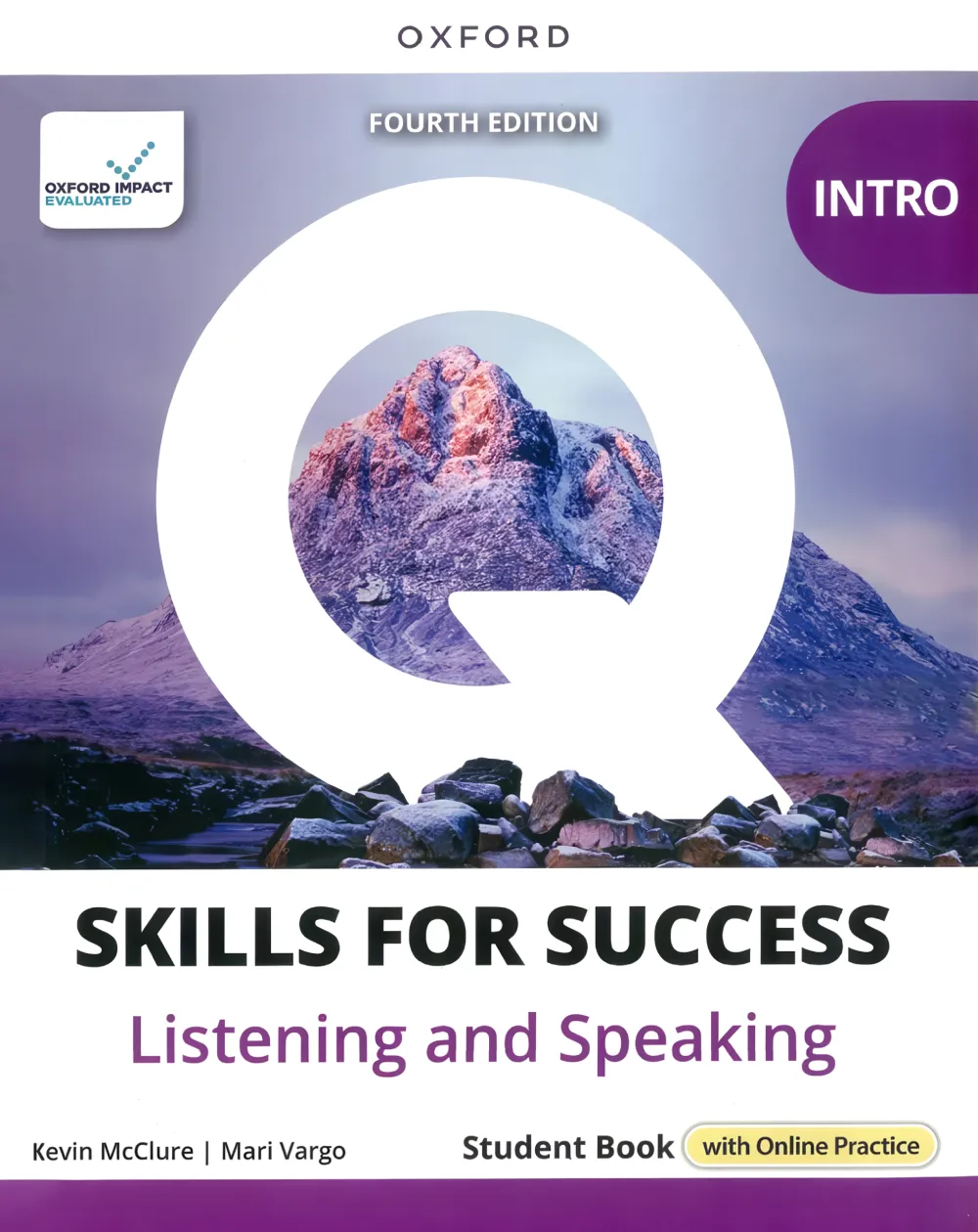
Q Skills for Success 4th Edition Intro Listening Speaking Student Book
A Question-Centered Approach to Language Learning
One of the defining features of Q Skills for Success is its question-centered methodology. Each unit is organized around an engaging unit question connected to a broader academic or social theme.
Instead of presenting language as a collection of disconnected exercises, the course invites students to investigate an important question, examine different perspectives, collect information from spoken texts, and develop their own response.
This structure supports deeper learning because students have a genuine reason to listen and speak. Listening activities provide ideas and evidence, while speaking tasks allow learners to process, evaluate, and apply what they have learned.
The unit question also creates coherence. Vocabulary, pronunciation, listening strategies, critical thinking activities, discussions, and final speaking tasks all contribute to a shared communicative goal.
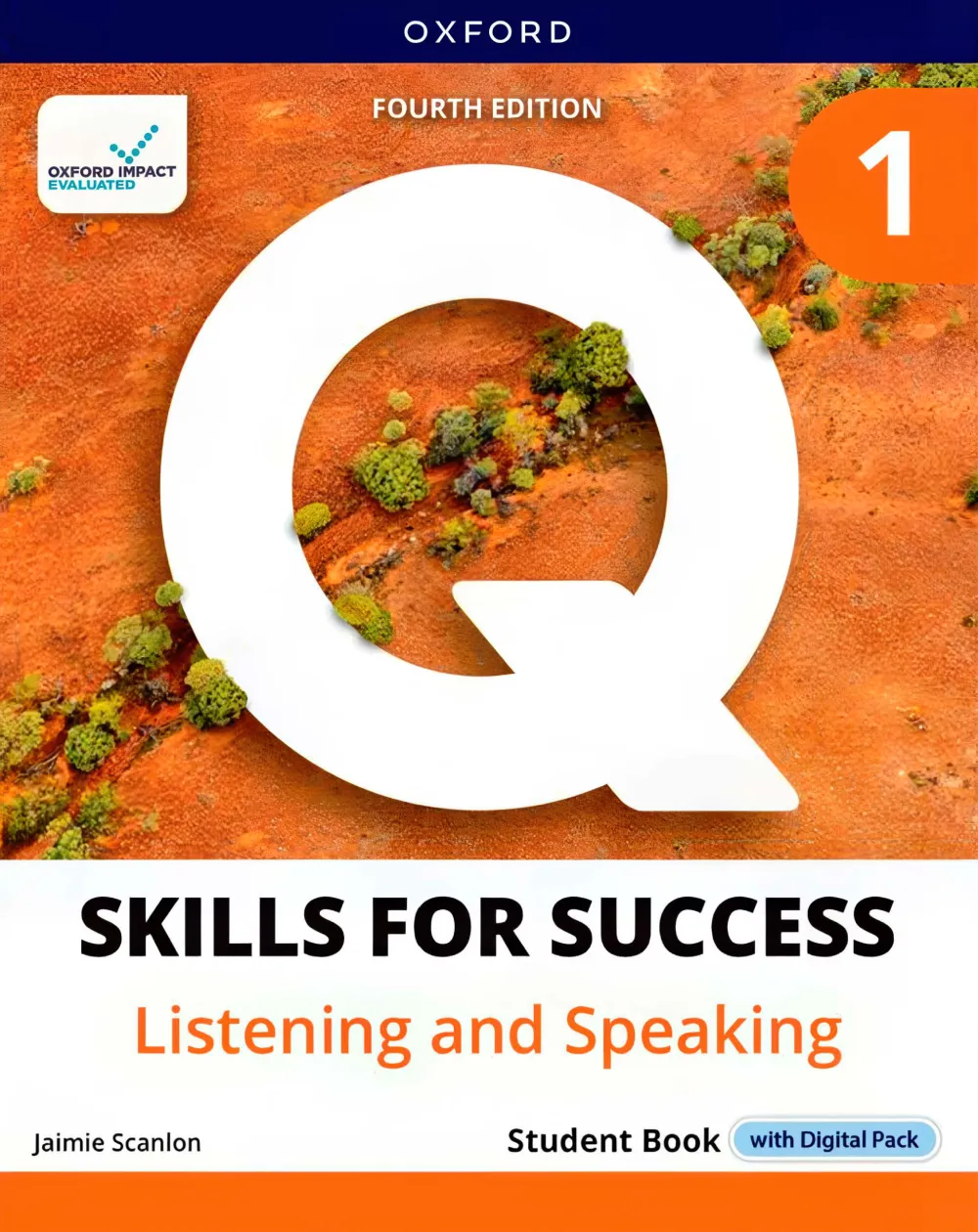
Q Skills for Success 4th Edition 1 Listening Speaking Student Book
Key Features of the Fourth Edition
1. Systematic academic listening development
The course teaches learners how to approach spoken English strategically. Students practice listening for main ideas, important details, examples, explanations, opinions, contrasts, and relationships between ideas.
As learners progress through the series, they encounter increasingly complex listening situations. These may include conversations, interviews, presentations, discussions, lectures, reports, and other forms of spoken academic communication.
Students are encouraged to listen actively rather than attempting to understand every word. They learn how to anticipate content, recognize organizational patterns, use contextual clues, take useful notes, and confirm their understanding.
2. Purposeful speaking practice
Speaking activities move beyond short, mechanical responses. Learners gradually develop the language and confidence needed to explain ideas, ask follow-up questions, compare viewpoints, support opinions, clarify meaning, respond to other speakers, and deliver organized presentations.
The course provides a progression from guided practice to more independent communication. At lower levels, students receive models, sentence frames, vocabulary support, and clearly defined speaking steps. At higher levels, they are expected to manage longer discussions, synthesize information, defend positions, and communicate with greater precision.
3. Critical thinking in every unit
Critical thinking is not treated as an optional extension. It is integrated into the learning process from the beginning of each unit to the final communicative outcome.
Students may be asked to categorize information, distinguish facts from opinions, identify causes and effects, compare alternatives, evaluate evidence, recognize assumptions, make inferences, or justify a conclusion.
These tasks help learners become more thoughtful listeners and more persuasive speakers. They also prepare students for academic settings in which success depends on the ability to analyze information rather than simply repeat it.
4. A new Global Skills curriculum
The Fourth Edition expands the course beyond conventional language instruction through a dedicated focus on global skills. These skills support learners as they participate in modern education, employment, and international communication.
Key areas include:
- Collaboration and effective teamwork
- Digital literacy and responsible technology use
- Communication across different perspectives
- Self-management and independent learning
- Personal and academic wellbeing
- Reflection and lifelong learning
These areas are closely connected to the course’s speaking tasks. Learners are expected to listen respectfully, share responsibility, negotiate meaning, reflect on their performance, and improve through feedback.
5. New and updated content
The Fourth Edition includes new and revised unit topics, texts, questions, and activities. The content connects language learning with subjects that students may encounter in education, work, media, technology, health, science, society, and the environment.
Well-chosen topics encourage learners to contribute personal knowledge while also considering unfamiliar ideas. This balance makes classroom communication more authentic and intellectually productive.
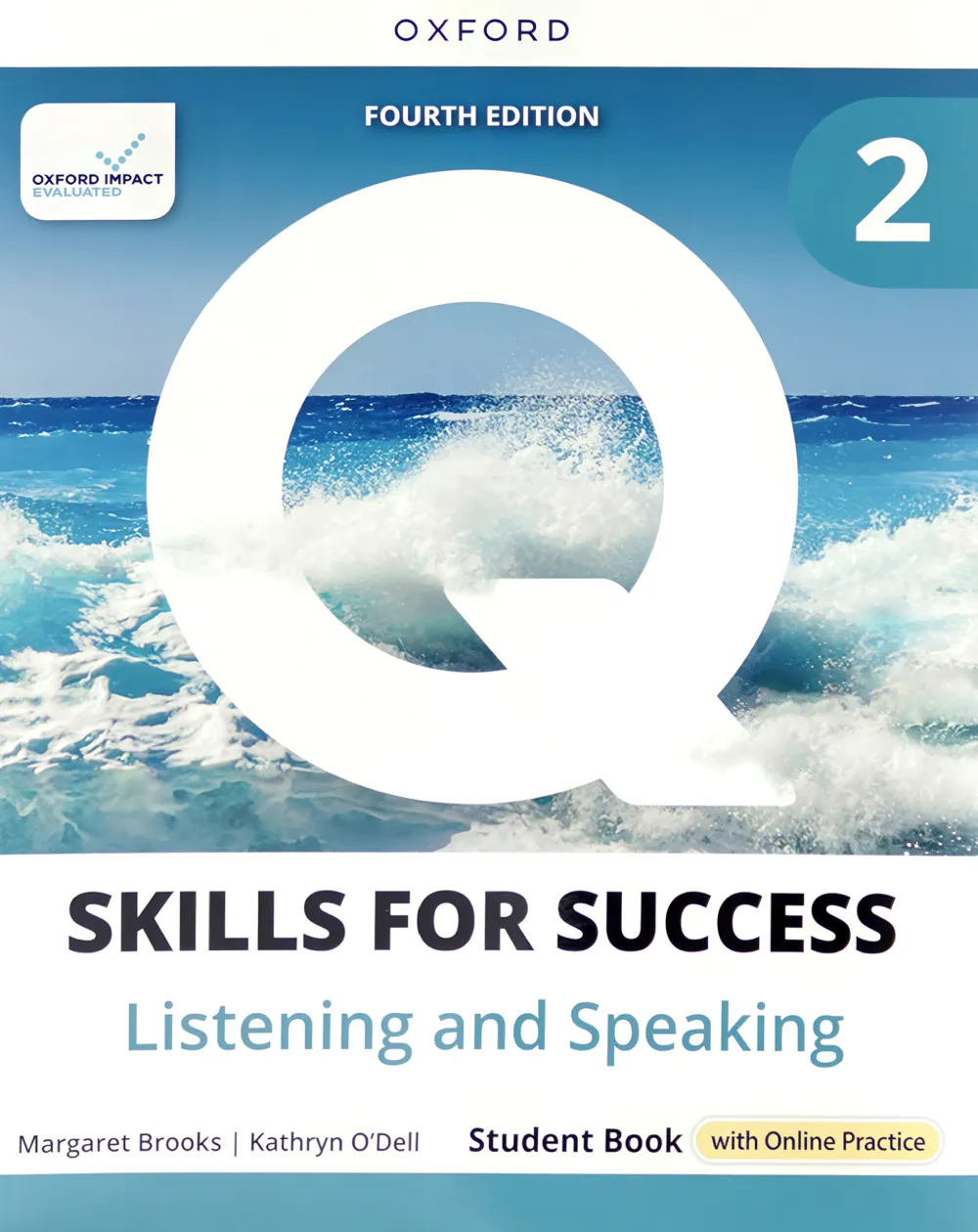
Q Skills for Success 4th Edition 2 Listening Speaking Student Book
How the Course Develops Academic Listening
Listening is often one of the most demanding skills for English learners. Natural speech is continuous, temporary, and influenced by pronunciation, speed, accent, context, and the speaker’s purpose. Students may recognize individual words in writing but struggle to identify them in connected speech.
Q Skills for Success Fourth Edition addresses this challenge through a staged listening process.
Before listening
Learners activate background knowledge, examine the topic, preview essential language, make predictions, and establish a clear purpose for listening. These activities reduce cognitive overload and prepare students to process new information more efficiently.
During listening
Students complete focused tasks that guide their attention toward meaning. They may listen for the central message, supporting details, examples, sequences, comparisons, attitudes, or relationships between speakers.
By separating listening purposes, the course helps learners understand that effective listening is selective. Skilled listeners do not process every element with equal attention; they focus on information that is relevant to their immediate goal.
After listening
Learners review information, compare notes, discuss interpretations, evaluate ideas, and connect the listening content to the unit question. This stage transforms listening from passive reception into active intellectual engagement.
Information from the listening texts is frequently used as evidence or inspiration for subsequent speaking tasks. Students therefore experience listening and speaking as interconnected processes.
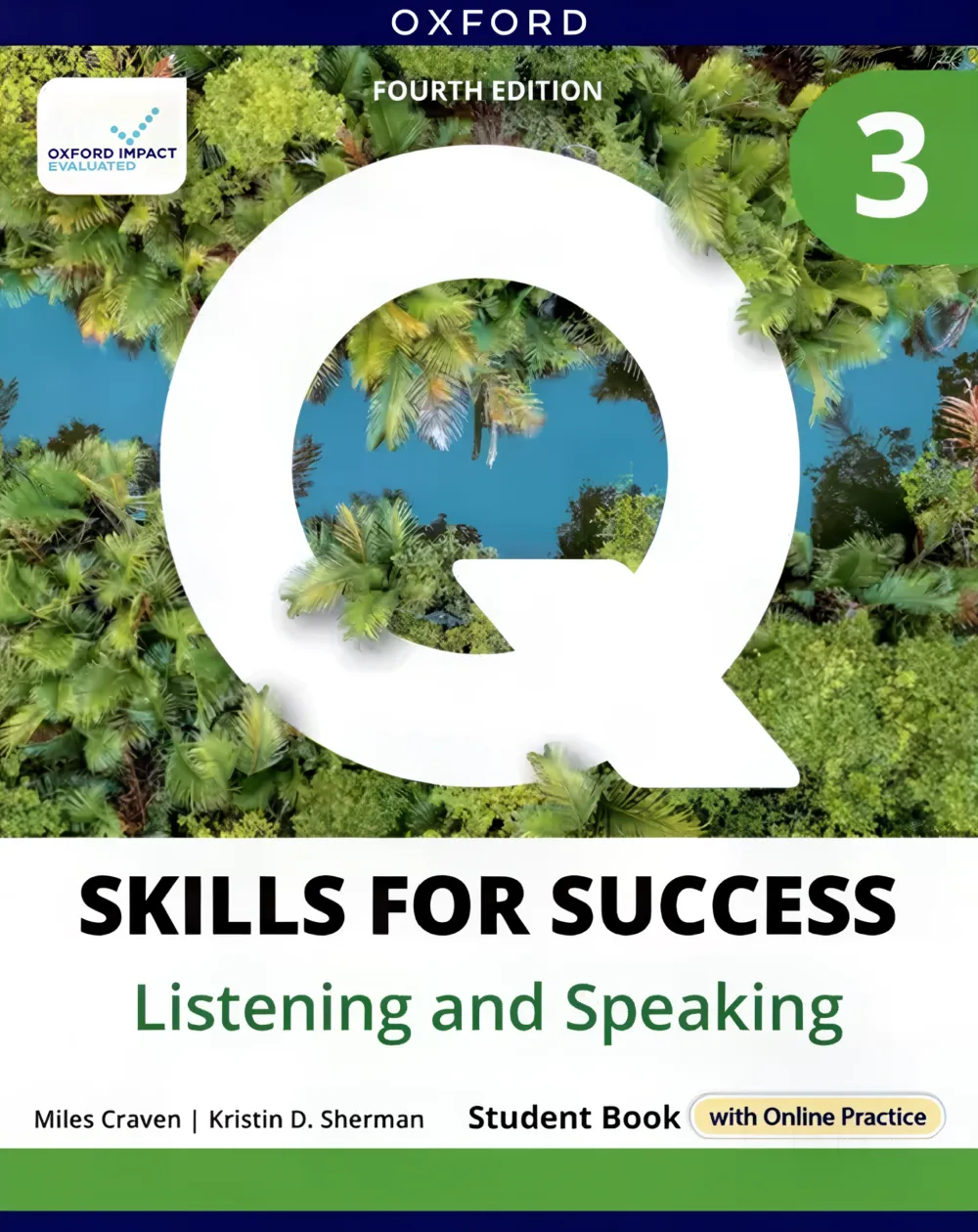
Q Skills for Success 4th Edition 3 Listening Speaking Student Book
Building Confidence in Academic Speaking
Fluent speaking involves more than producing grammatically correct sentences. Learners must organize ideas, select appropriate language, respond in real time, monitor the listener’s reaction, and adjust their message when communication becomes unclear.
The series supports this complex process through structured preparation and repeated practice. Students encounter useful language for common communicative purposes, such as:
- Giving and supporting an opinion
- Agreeing and disagreeing appropriately
- Asking for clarification
- Checking understanding
- Comparing ideas and alternatives
- Explaining causes and consequences
- Summarizing information
- Introducing examples and evidence
- Participating in group discussions
- Delivering organized presentations
Pronunciation work also supports intelligibility. Rather than treating pronunciation as an attempt to eliminate a learner’s accent, the course emphasizes features that make spoken communication easier to understand.
As students move through the levels, speaking outcomes become longer, more analytical, and more independent. Learners gradually progress from brief personal exchanges to academic discussions and structured presentations based on multiple sources of information.
Vocabulary and Language in Meaningful Context
Vocabulary is most useful when learners understand how words function in real communication. Q Skills for Success introduces language within meaningful academic and thematic contexts rather than as isolated lists.
Students encounter vocabulary in listening texts, examine meaning and usage, and apply new language in discussions and speaking activities. Repeated exposure across the unit increases the likelihood that receptive vocabulary will become available for active communication.
The course also develops language for academic functions. Learners practice expressions used to define, compare, classify, explain, evaluate, summarize, and present evidence. These functions are valuable across many subjects and can transfer to future study or professional communication.
Digital Learning with Oxford English Hub
The Fourth Edition combines printed materials with an expanded digital learning environment. Depending on the selected product package, students may receive access to Online Practice and digital resources through Oxford English Hub.
The upgraded iQ Online Practice allows learners to continue studying outside the classroom through interactive, focused activities. Students can review course language, practice listening, record spoken responses, and revisit audio or video materials at a suitable pace.
This flexibility is particularly valuable for listening and speaking development. Learners often need more repetition than classroom time allows. Digital practice gives them the opportunity to pause, replay, rehearse, record, and reflect before attempting a task again.
Teachers can also use the improved Classroom Presentation Tool to display course content, play media, present activities, and manage lessons in face-to-face or online environments.
Learning Journeys provide additional flexibility by helping teachers select resources and organize lessons according to the needs of a particular class, institution, or academic program.
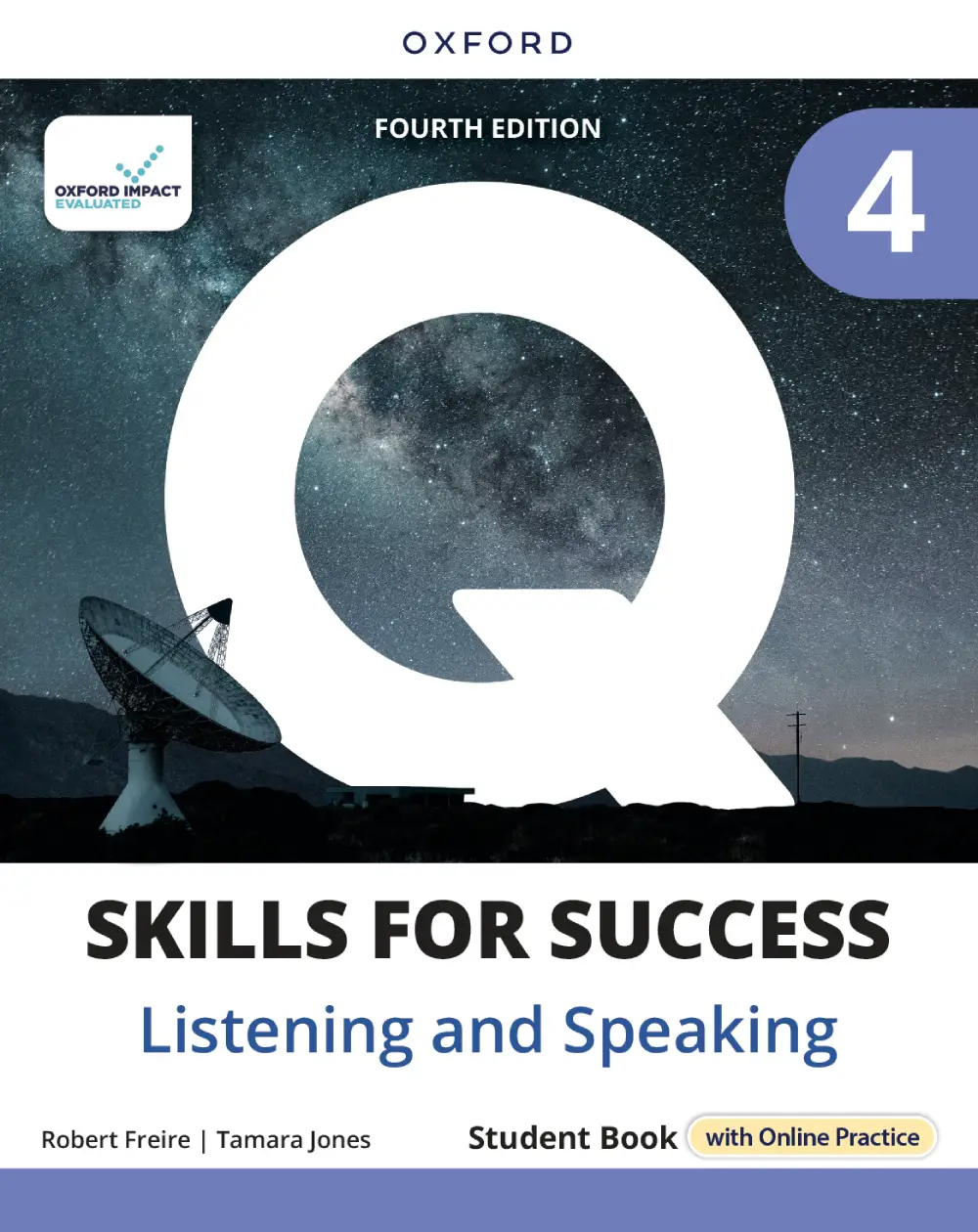
Q Skills for Success 4th Edition 4 Listening Speaking Student Book
Q Skills for Success Fourth Edition Levels and CEFR
The Listening and Speaking strand contains six levels, providing a continuous pathway from beginner to advanced academic English.
| Course Level | CEFR Level | General Proficiency |
|---|---|---|
| Intro | A1 | Beginner |
| Level 1 | A1 | Elementary |
| Level 2 | A2 | Pre-intermediate |
| Level 3 | B1 | Intermediate |
| Level 4 | B2 | Upper-intermediate |
| Level 5 | C1 | Advanced |
The CEFR progression makes the series suitable for multi-level programs that require a clear developmental pathway. However, institutions should use placement tests, learner performance, and course objectives when selecting the most appropriate starting level.
Who Is the Series Designed For?
Q Skills for Success Fourth Edition Listening and Speaking is particularly suitable for:
- University and college students studying English for Academic Purposes
- International students preparing for English-medium education
- Adult and young adult learners developing academic communication
- Upper-secondary students preparing for further study
- Language centers offering integrated academic skills programs
- Learners who need stronger discussion and presentation skills
- Teachers seeking a structured critical-thinking curriculum
The course is not designed primarily as a narrow examination-preparation series. Nevertheless, the listening, note-taking, discussion, vocabulary, pronunciation, and presentation skills it develops can provide a strong foundation for many academic English assessments.
Why the Series Works Well in Academic English Programs
A clear progression across levels
The six-level structure allows institutions to build a consistent curriculum from A1 to C1. Students encounter familiar learning routines while the linguistic and cognitive demands increase progressively.
Strong integration of language and thinking
The course recognizes that academic communication requires both language proficiency and intellectual engagement. Students learn to understand ideas, evaluate them, and formulate an appropriate response.
Balanced classroom support and learner independence
Guided classroom activities provide the support learners need, while self-assessment, reflection, and digital practice encourage greater responsibility for learning.
Flexible use in different teaching contexts
The combination of print and digital resources supports face-to-face, blended, and online learning. Teachers can adapt the sequence and amount of material according to course length and student needs.
Preparation for communication beyond the classroom
The discussion, collaboration, presentation, and critical thinking skills developed in the course are relevant not only to academic study but also to professional and international environments.
How Teachers Can Use the Course Effectively
To gain the greatest educational value from the series, teachers should treat the unit question as a genuine inquiry rather than a decorative heading. Students can record an initial response at the beginning of a unit and revisit it after completing the listening texts and speaking tasks.
Teachers should also provide sufficient time for speaking preparation. Allowing learners to organize notes, select evidence, rehearse key language, and anticipate questions can significantly improve both fluency and confidence.
Listening activities are most effective when students listen with different purposes. A first listening may focus on the overall message, while later listening can examine details, organization, speaker attitude, or useful language.
Recorded speaking practice should be followed by reflection. Students can evaluate whether their ideas were clear, their evidence was relevant, and their delivery was understandable. This process helps learners become more independent and better able to regulate their own progress.
Finally, teachers should create opportunities to reuse language from earlier units. Academic vocabulary and speaking strategies become durable only when learners apply them repeatedly in new contexts.
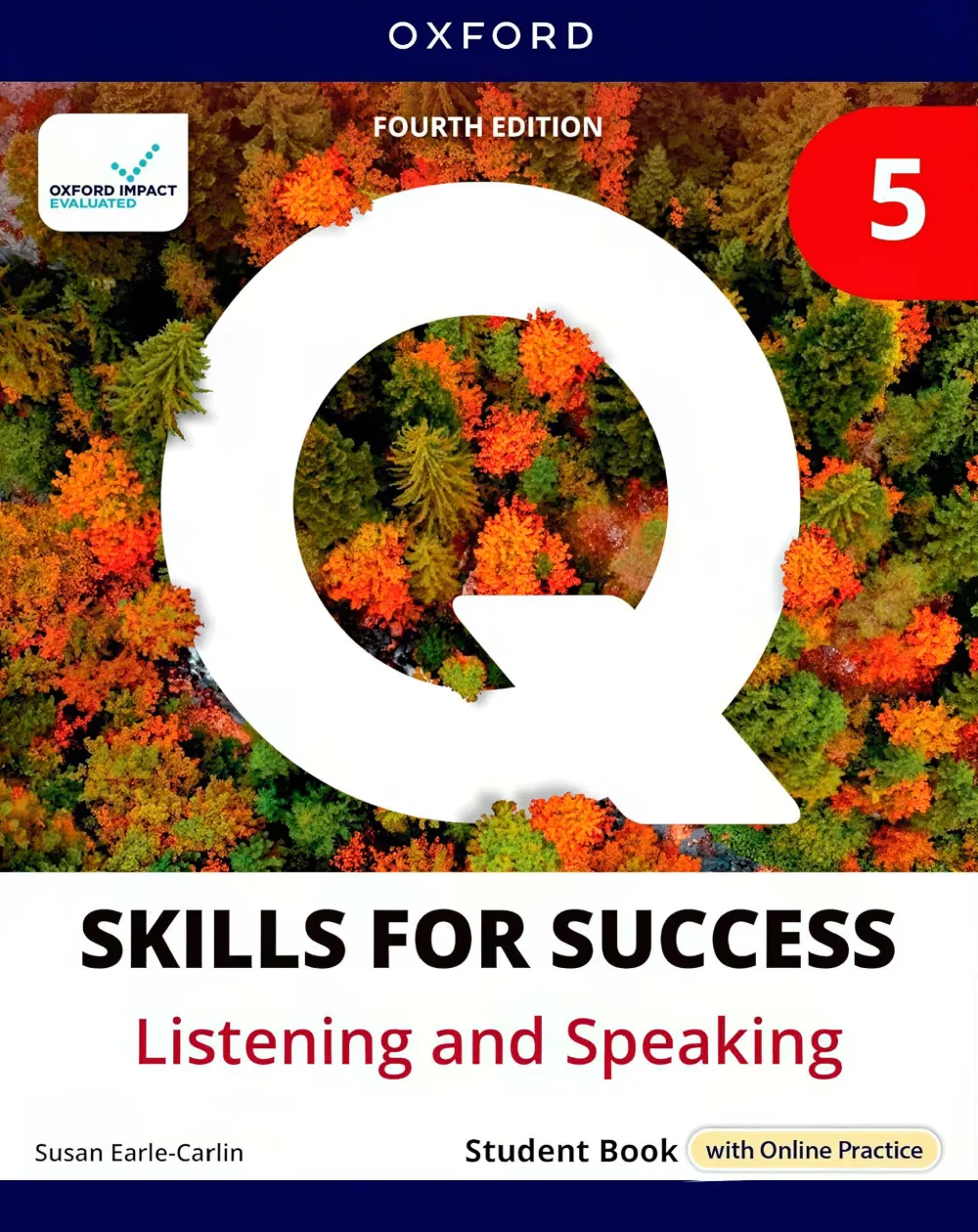
Q Skills for Success 4th Edition 5 Listening Speaking Student Book
What Is New in the Fourth Edition?
The Fourth Edition retains the question-centered and critical-thinking foundations associated with Q Skills for Success while updating the course for contemporary learning environments.
Important developments include:
- A new Global Skills curriculum integrated throughout the units
- New and updated topics, texts, questions, and activities
- Greater attention to collaboration, digital literacy, and wellbeing
- Self-assessment checklists and guided reflection tasks
- Upgraded iQ Online Practice for independent study
- An improved Classroom Presentation Tool
- Flexible Learning Journeys for lesson planning
- Stronger integration of print and digital course components
These changes make the new edition more responsive to the realities of modern education, where learners must communicate effectively across classroom, digital, academic, and professional settings.
Educational Evaluation
From a pedagogical perspective, the greatest strength of Q Skills for Success Fourth Edition Listening and Speaking is its integration of language, thought, and purposeful communication.
The course does not assume that speaking ability will develop automatically after students study vocabulary and grammar. Instead, it breaks communication into teachable processes: preparing ideas, understanding input, selecting evidence, organizing a response, interacting with others, and reflecting on performance.
Its question-centered design also helps prevent the fragmentation that can occur in traditional skills courses. Learners understand why they are completing each activity and how individual tasks contribute to a larger academic outcome.
For institutions seeking a structured academic English program, the series offers a coherent progression, modern digital support, and a broad conception of student success. It prepares learners not only to understand spoken English, but also to participate confidently and responsibly in the conversations that shape education, work, and society.
Frequently Asked Questions
How many levels are included in Q Skills for Success Fourth Edition Listening and Speaking?
The series contains six levels: Intro and Levels 1 to 5. Together, they cover a progression from CEFR A1 to C1.
Is Q Skills for Success Fourth Edition British or American English?
Q Skills for Success is an American English series published by Oxford University Press. Its content is designed for learners in international academic and professional contexts.
What skills does the Listening and Speaking strand develop?
It develops academic listening, note-taking, vocabulary, pronunciation, discussion, presentation, critical thinking, collaboration, reflection, and independent learning skills.
Is the course suitable for university students?
Yes. The series is especially well suited to university preparation, English for Academic Purposes programs, international foundation courses, and college-level language instruction.
Can the course be used for blended or online learning?
Yes. Print materials can be combined with Online Practice, digital student resources, audio, video, speaking-recording activities, and classroom presentation tools through Oxford’s digital learning environment.
Does the course include critical thinking?
Yes. Critical thinking strategies are integrated throughout the units. Students analyze information, compare perspectives, evaluate evidence, make inferences, and support their conclusions.
What is the difference between the Listening and Speaking and Reading and Writing strands?
The Listening and Speaking strand develops spoken comprehension, interaction, pronunciation, discussion, and presentation. The Reading and Writing strand focuses on understanding academic texts and producing organized written work. The two strands can be taught separately or used together as part of an integrated academic English program.
Conclusion
Q Skills for Success Fourth Edition Listening and Speaking provides a modern and academically rigorous pathway for learners who need to understand spoken English and communicate ideas with clarity and confidence.
Through meaningful unit questions, systematic listening strategies, purposeful speaking tasks, critical thinking, global skills, and flexible digital practice, the course prepares students for much more than successful language lessons. It helps them become independent learners, thoughtful participants, and effective communicators in academic, professional, and international settings.