Q Skills for Success 4th Edition Reading and Writing
Intro (A1)
Q Skills for Success 4th Intro R&W Answer Key.pdf
Q Skills for Success 4th Intro R&W Assessment.zip
Q Skills for Success 4th Intro R&W Audio.zip
Q Skills for Success 4th Intro Other Resources.zip
Q Skills for Success 4th Intro R&W Student Book.pdf – Sample: Click
Q Skills for Success 4th Intro R&W Teacher’s Guide.pdf – Sample: Click
Q Skills for Success 4th Intro R&W Video.zip
Q Skills for Success 4th Intro R&W Worksheets.zip
Level 1 (A2)
Q Skills for Success 4th 1 R&W Answer Key.pdf
Q Skills for Success 4th 1 R&W Assessment.zip
Q Skills for Success 4th 1 R&W Audio.zip
Q Skills for Success 4th 1 R&W Other Resources.zip
Q Skills for Success 4th 1 R&W Outline.zip
Q Skills for Success 4th 1 R&W Student Book.pdf – Sample: Click
Q Skills for Success 4th 1 R&W Teacher’s Guide.pdf – Sample: Click
Q Skills for Success 4th 1 R&W Video.zip
Q Skills for Success 4th 1 R&W Worksheets.zip
Level 2 (B1)
Q Skills for Success 4th 2 R&W Answer Key.pdf
Q Skills for Success 4th 2 R&W Assessment.zip
Q Skills for Success 4th 2 R&W Audio.zip
Q Skills for Success 4th 2 R&W Other Resources.zip
Q Skills for Success 4th 2 R&W Outline.zip
Q Skills for Success 4th 2 R&W Student Book.pdf – Sample: Click
Q Skills for Success 4th 2 R&W Teacher’s Guide.pdf – Sample: Click
Q Skills for Success 4th 2 R&W Video.zip
Q Skills for Success 4th 2 R&W Worksheets.zip
Level 3 (B1+ / B2)
Q Skills for Success 4th 3 R&W Answer Key.pdf
Q Skills for Success 4th 3 R&W Assessment.zip
Q Skills for Success 4th 3 R&W Audio.zip
Q Skills for Success 4th 3 R&W Other Resources.zip
Q Skills for Success 4th 3 R&W Outline.zip
Q Skills for Success 4th 3 R&W Student Book.pdf – Sample: Click
Q Skills for Success 4th 3 R&W Teacher’s Guide.pdf – Sample: Click
Q Skills for Success 4th 3 R&W Video.zip
Q Skills for Success 4th 3 R&W Worksheets.zip
Level 4 (B2)
Q Skills for Success 4th 4 R&W Answer Key.pdf
Q Skills for Success 4th 4 R&W Assessment.zip
Q Skills for Success 4th 4 R&W Audio.zip
Q Skills for Success 4th 4 R&W Other Resources.zip
Q Skills for Success 4th 4 R&W Outline.zip
Q Skills for Success 4th 4 R&W Student Book.pdf – Sample: Click
Q Skills for Success 4th 4 R&W Teacher’s Guide.pdf – Sample: Click
Q Skills for Success 4th 4 R&W Video.zip
Q Skills for Success 4th 4 R&W Worksheets.zip
Level 5 (C1)
Q Skills for Success 4th 5 R&W Answer Key.pdf
Q Skills for Success 4th 5 R&W Assessment.zip
Q Skills for Success 4th 5 R&W Audio.zip
Q Skills for Success 4th 5 R&W Other Resources.zip
Q Skills for Success 4th 5 R&W Outline.zip
Q Skills for Success 4th 5 R&W Student Book.pdf – Sample: Click
Q Skills for Success 4th 5 R&W Teacher’s Guide.pdf – Sample: Click
Q Skills for Success 4th 5 R&W Video.zip
Q Skills for Success 4th 5 R&W Worksheets.zip
๏ Q Skills for Success 4th Edition Listening & Reading: Click here
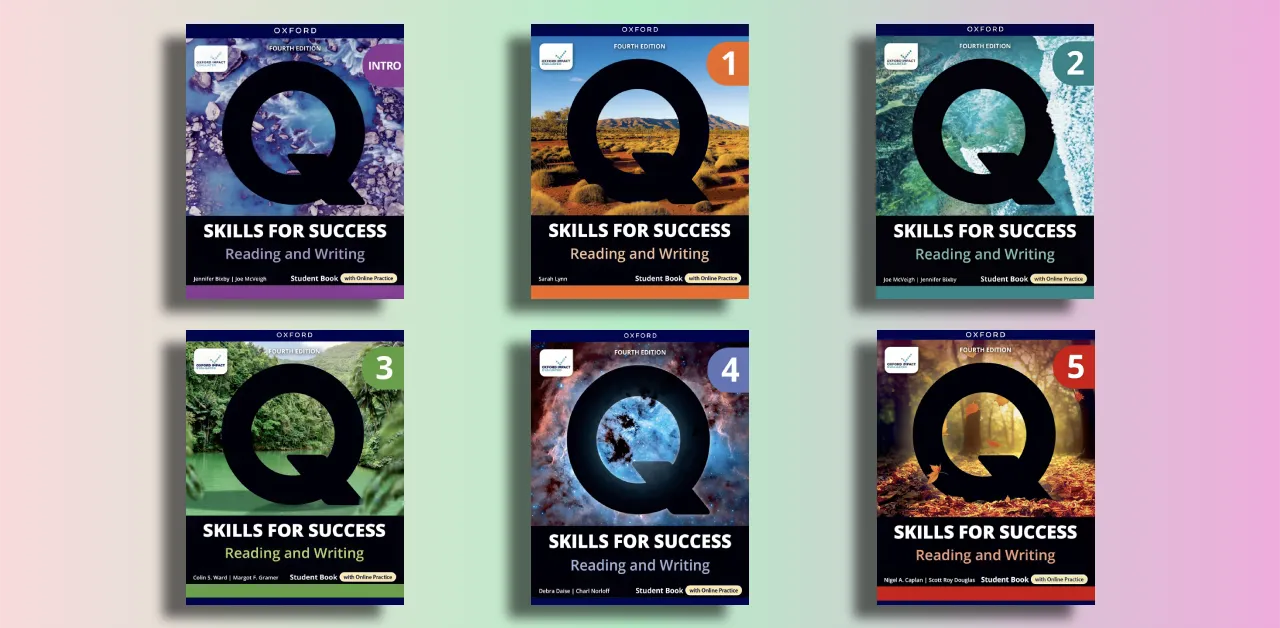
Giới thiệu “Q Skills for Success Fourth Edition Reading and Writing”
| ✅ Bộ giáo trình: | Q Skills for Success Fourth Edition |
| ✅ Tác giả: | Jennifer Bixby, Joe McVeigh, Kevin McClure, Mari Vargo, Sarah Lynn, Jaimie Scanlon, Margaret Brooks, Kathryn O’Dell, Colin S. Ward, Margot F. Gramer, Miles Craven, Kristin D. Sherman, Debra Daise, Charl Norloff, Robert Freire, Tamara Jones, Nigel A. Caplan, Scott Roy Douglas, Susan Earle-Carlin. |
| ✅ Nhà xuất bản: | Oxford University Press |
| ✅ Levels: | A1, A2, B1, B2, C1 (Beginner to Advanced) |
| ✅ Ngôn ngữ: | American English |
| ✅ Kỹ năng: | Reading, Writing |
| ✅ Dành cho: | Adult, High School, Higher Education |
| ✅ Năm xuất bản: | 2025 |
Q: Skills for Success Fourth Edition Reading and Writing is a comprehensive academic English course from Oxford University Press. Designed for learners from CEFR A1 to C1, the series develops the reading, writing, vocabulary, grammar, critical thinking, and global skills students need for success in education, employment, and everyday life.
Rather than teaching reading and writing as separate abilities, the course connects them through meaningful questions and carefully structured assignments. Students read to gather information, examine different perspectives, organize ideas, and ultimately produce a clear piece of writing. This integrated approach reflects how literacy is used in real academic and professional contexts.
What Is Q: Skills for Success Fourth Edition Reading and Writing?
Q: Skills for Success Fourth Edition is a six-level, paired-skills American English series. It consists of two complementary strands:
- Reading and Writing
- Listening and Speaking
The Reading and Writing strand focuses on building academic literacy through high-interest content, explicit skills instruction, vocabulary development, grammar practice, critical thinking, and guided writing tasks.
The course begins with an Introductory Level and continues through Levels 1 to 5. Across the series, students gradually move from understanding short, accessible texts and writing basic paragraphs to analyzing complex arguments and producing organized academic essays, proposals, reports, and other extended texts.
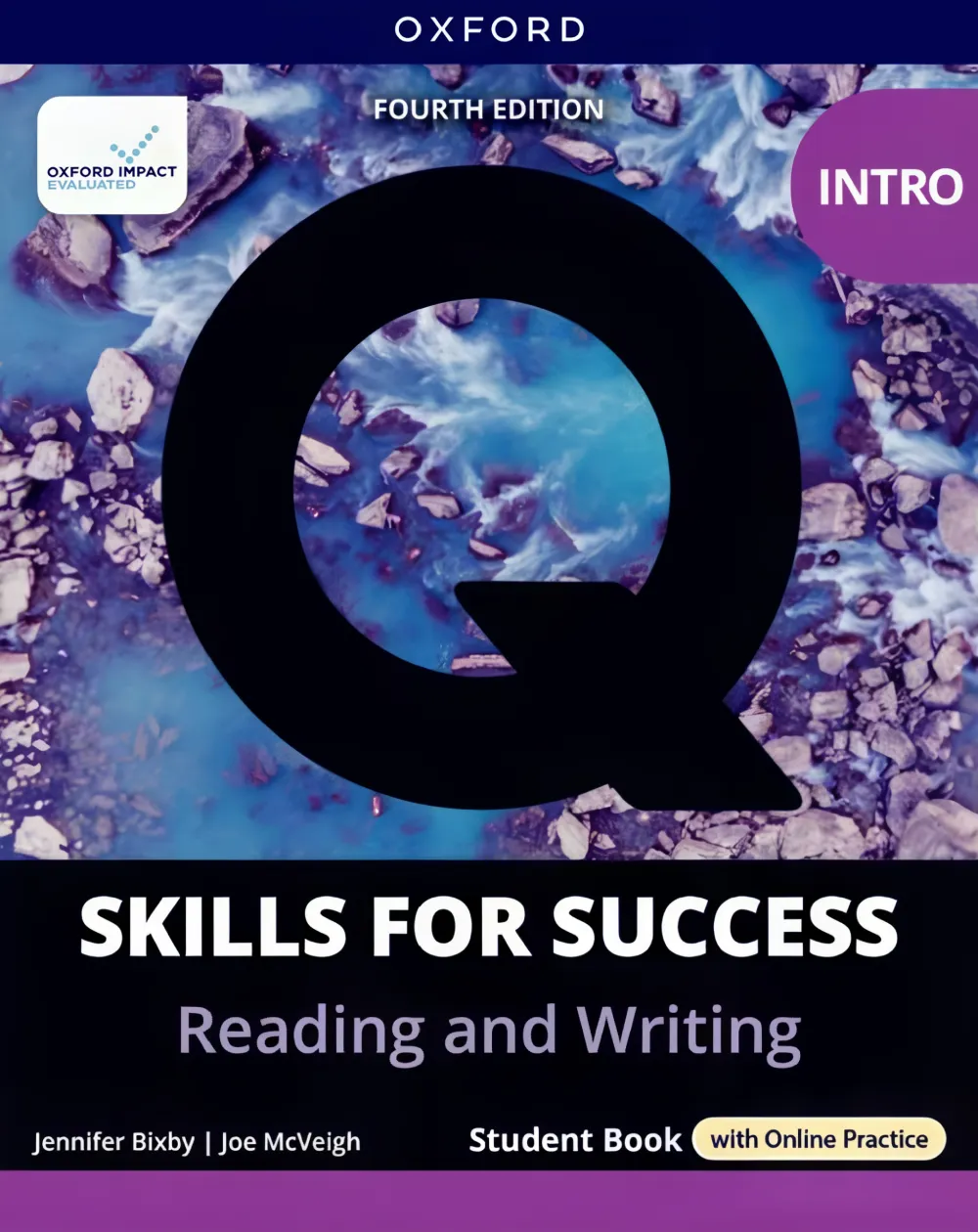
Q Skills for Success 4th Edition Intro Reading and Writing Student Book
What Is New in the Fourth Edition?
The Fourth Edition retains the question-centered and critical-thinking approach for which Q: Skills for Success is known, while introducing a more streamlined structure and a stronger connection between academic study, professional development, and life beyond the classroom.
A Stronger Focus on Professional Success
Students are regularly encouraged to consider how the skills developed in each unit can be applied in future studies and employment. Reading, researching, evaluating information, communicating clearly, collaborating with others, and responding constructively to feedback are presented as practical abilities rather than isolated classroom exercises.
This makes the course especially relevant for learners preparing for university, pathway programs, international study, or careers in which English is used for professional communication.
A New Global Skills Curriculum
Every unit develops a clearly identified critical-thinking strategy together with an additional global skill. Depending on the topic and level, these may include:
- Collaboration
- Communication
- Creativity
- Digital literacies
- Citizenship
- Intercultural competence
- Emotional self-regulation
- Well-being
- Learning to learn
These skills are not presented as abstract ideas. They are connected to reading texts, classroom discussions, writing assignments, peer review, research, and real-world decision-making.
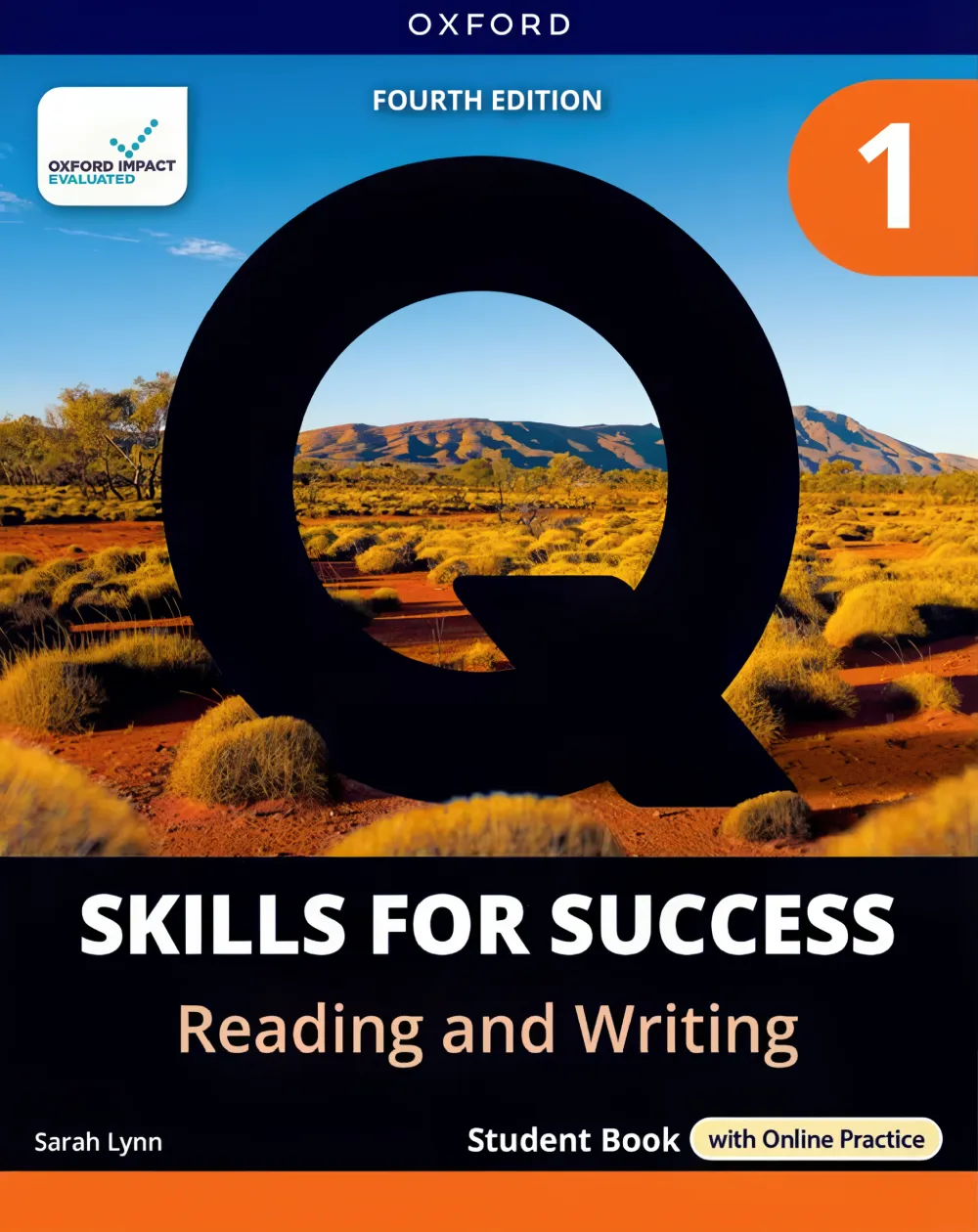
Q Skills for Success 4th Edition 1 Reading and Writing Student Book
Greater Support for Independent Learning
The Fourth Edition gives learners clearer guidance on what they are expected to achieve and how they can evaluate their own progress. Unit objectives, skill boxes, success tips, reflection activities, and self-assessment checklists help students become more aware of the learning process.
This emphasis on reflection is important because successful readers and writers do more than complete tasks. They plan, monitor their understanding, evaluate their work, respond to feedback, and revise their strategies when necessary.
An Updated Digital and Assessment Package
The course is supported by an upgraded digital environment, including iQ Online Practice and resources delivered through Oxford English Hub. Online activities provide additional practice in reading, vocabulary, pronunciation, grammar, writing, and global skills.
Teachers can also use the Classroom Presentation Tool to display course content, manage interactive activities, and access teaching resources during lessons. The assessment package includes unit tests, midterm tests, final tests, and alternative A and B versions.
How Does the Course Integrate Reading and Writing?
One of the strongest features of Q: Skills for Success Fourth Edition Reading and Writing is the relationship between input and output. Students do not read a text, answer a few comprehension questions, and then move to an unrelated writing exercise.
Instead, each unit is built around a central question. Students examine that question through readings, videos, vocabulary work, discussions, and critical-thinking activities. They collect useful information and ideas throughout the unit before completing a final writing assignment.
This creates a purposeful learning sequence:
- Students consider a meaningful unit question.
- They activate their existing knowledge and express initial opinions.
- They read two texts offering information or different perspectives.
- They study relevant reading strategies and academic vocabulary.
- They analyze, compare, categorize, summarize, or evaluate ideas.
- They study a writing skill and related grammar.
- They plan and produce a unit assignment.
- They review, edit, assess, and reflect on their work.
Because the final assignment grows naturally from the unit content, students have something meaningful to write about. They are not expected to generate ideas without preparation or sufficient language support.
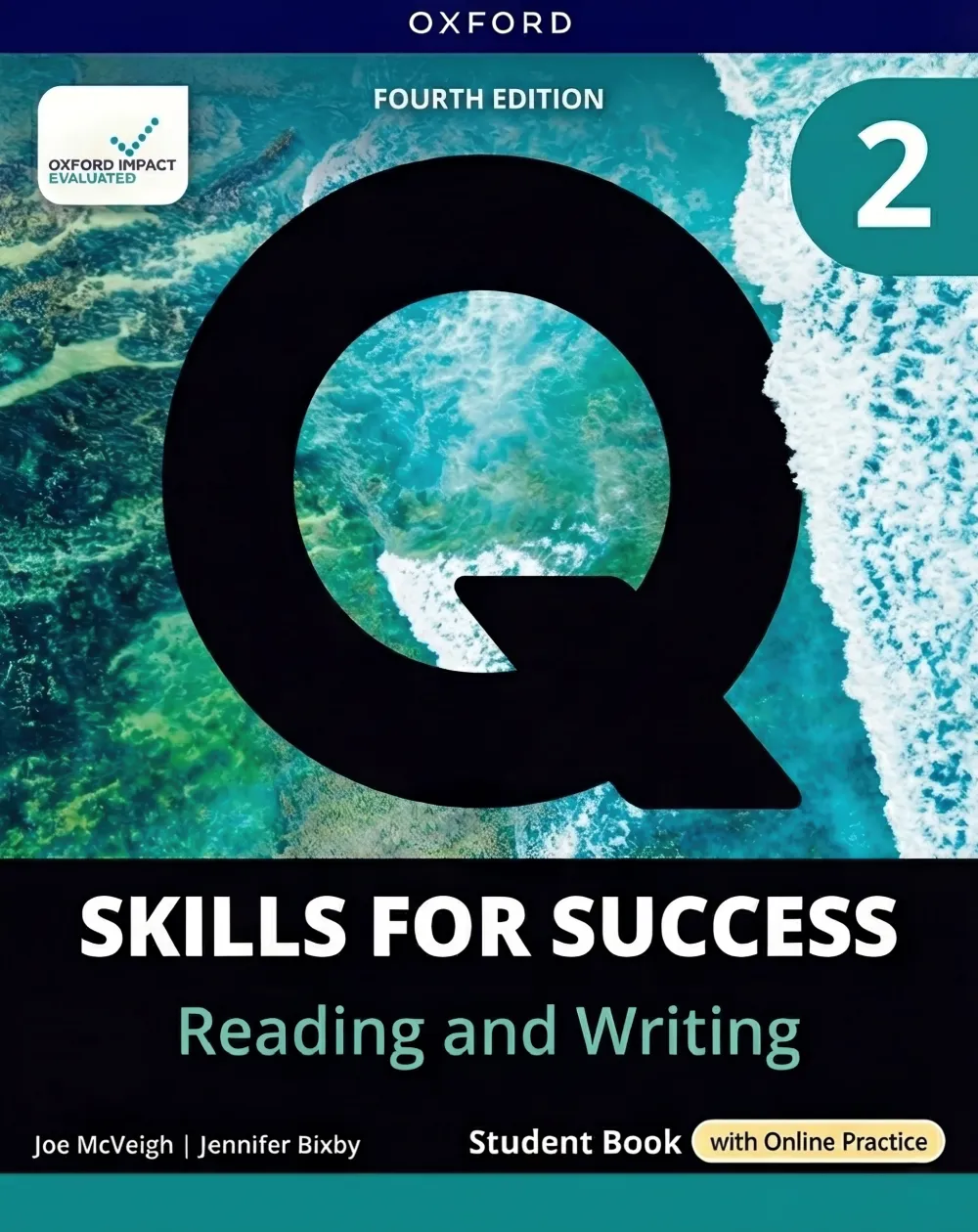
Q Skills for Success 4th Edition 2 Reading and Writing Student Book
A Typical Unit Structure
Although the level of complexity increases across the series, the units follow a consistent and learner-friendly pathway.
1. Unit Question and Topic Introduction
Each unit begins with a broad question connected to an academic discipline or contemporary issue. Examples include communication, psychology, technology, education, health sciences, environmental studies, urban planning, business, media, and international relations.
The question gives the unit a clear intellectual focus. It also encourages students to connect the topic with their own knowledge, experiences, and opinions before reading.
2. Reading 1
The first text introduces important information related to the unit question. Pre-reading activities develop topic vocabulary, activate background knowledge, and help students predict the content.
Students then apply a clearly defined reading strategy. Depending on the level, this may involve identifying the main idea, recognizing supporting details, skimming, scanning, making inferences, distinguishing fact from opinion, identifying an author’s purpose, interpreting visual information, or evaluating evidence.
3. Reading 2
The second reading expands the topic by introducing another example, perspective, text type, or argument. Students are encouraged to connect information across the two texts rather than treating each reading as an isolated passage.
This prepares learners for academic study, where they must often combine information from several sources before reaching a conclusion or developing an argument.
4. Vocabulary Development
Vocabulary is taught in context and recycled through reading, discussion, grammar, and writing. Students work with word families, prefixes, suffixes, collocations, phrasal verbs, reporting verbs, academic vocabulary, dictionary skills, and Latin or Greek roots.
The aim is not simply to memorize definitions. Learners examine how words function in sentences, how word forms change, which words commonly occur together, and how vocabulary choices affect meaning and formality.
5. Writing Skills and Grammar
Each unit introduces a writing skill that supports the final assignment. At earlier levels, students may work on topic sentences, paragraph unity, supporting details, sentence variety, organization, and basic coherence.
At higher levels, the course develops more advanced abilities such as paraphrasing, summarizing, connecting information from multiple sources, supporting arguments with evidence, organizing essays, writing proposals, and producing cause-and-effect analysis.
Grammar is integrated into this process. Instead of appearing as a separate collection of rules, grammar is selected according to what students need for the unit assignment. This may include verb forms, modals, relative clauses, noun clauses, passive structures, connectors, parallel structure, quantifiers, or subject-verb agreement.
6. Critical Thinking and Global Skills
Students use information from the unit to perform purposeful thinking tasks. They may be asked to put ideas in order, draw conclusions, compare viewpoints, evaluate claims, recognize bias, form generalizations, solve problems, or synthesize information.
An additional global skill connects this thinking to a wider context. For example, students might practise giving constructive feedback, communicating effectively online, considering cultural perspectives, evaluating digital learning tools, or understanding how local decisions affect a community.
7. Unit Assignment
The unit culminates in a clearly defined writing task. Depending on the level, assignments may include:
- A descriptive or explanatory paragraph
- An opinion paragraph
- A response to an online discussion
- A professional or persuasive email
- A proposal
- A persuasive article
- An academic essay
- A written analysis
- A summary-and-response essay
- A cause-and-effect essay
- A business plan
Students are expected to apply the reading, vocabulary, grammar, writing, and critical-thinking skills developed throughout the unit.
8. Peer Review, Revision, and Reflection
Writing is treated as a process rather than a one-time performance. Students plan, draft, review, revise, edit, and prepare a final version.
Peer-review activities teach learners how to give and receive constructive feedback. Self-assessment checklists direct attention to organization, supporting ideas, vocabulary, grammar, spelling, punctuation, and task completion.
The final reflection encourages students to consider what they learned and whether their answer to the original unit question has changed.
Reading Skills Developed Across the Series
The reading program moves systematically from foundational comprehension to more sophisticated academic analysis. Students learn how to approach a text strategically rather than attempting to understand every word in the same way.
Key reading skills include:
- Previewing and predicting content
- Skimming for general meaning
- Scanning for specific information
- Identifying main ideas and supporting details
- Recognizing text organization
- Understanding reference words
- Using context to infer meaning
- Making inferences
- Distinguishing facts, opinions, claims, and evidence
- Identifying an author’s purpose and point of view
- Recognizing contrasting ideas
- Interpreting charts, graphs, and infographics
- Evaluating the reliability of information
- Synthesizing ideas from multiple sources
These strategies help students become more efficient readers. They also prepare learners to handle the varied text types encountered in university courses, professional communication, digital media, and standardized assessments.
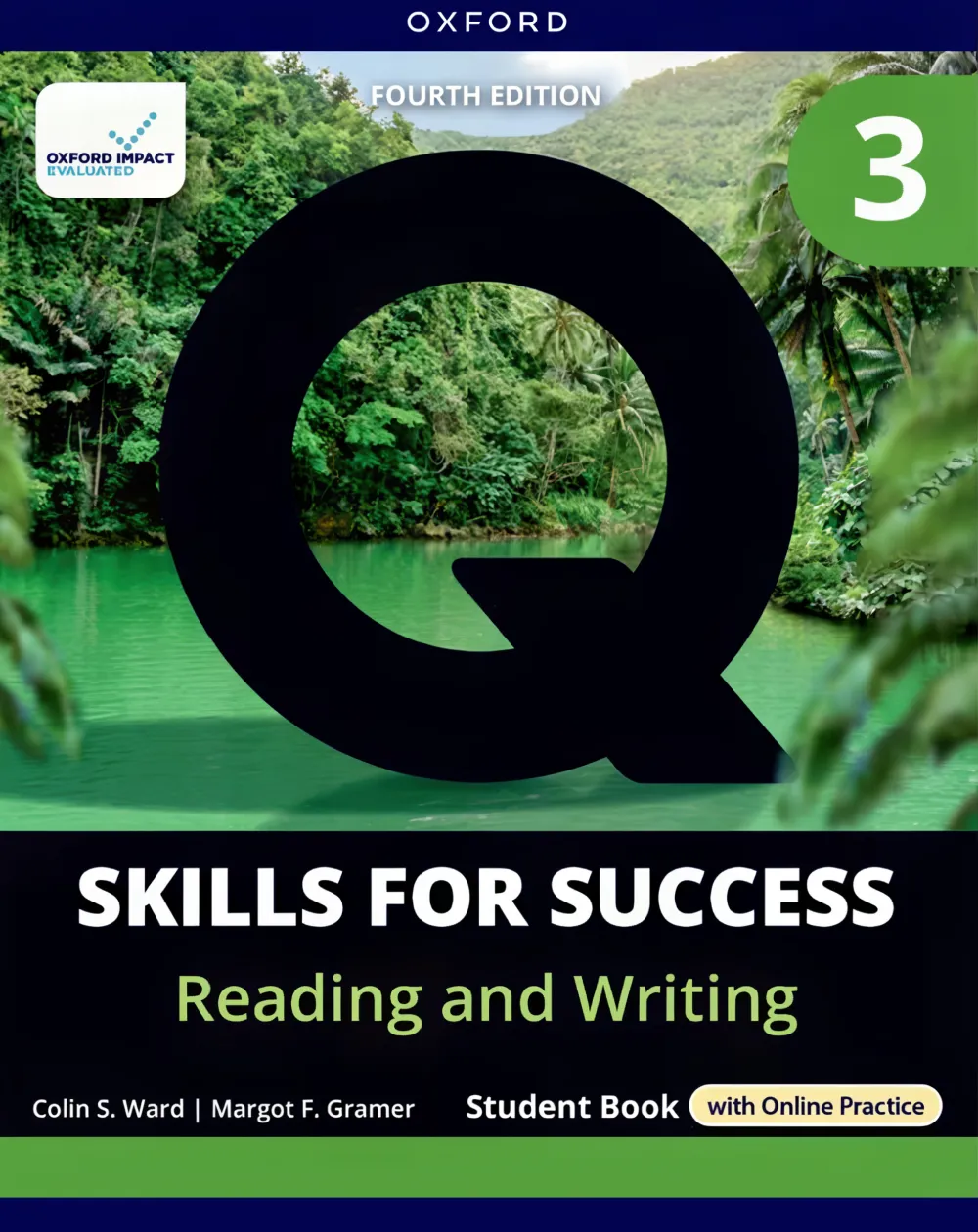
Q Skills for Success 4th Edition 3 Reading and Writing Student Book
Writing Development from Paragraphs to Academic Essays
The writing syllabus follows a gradual progression. Early levels provide substantial support with sentence construction, paragraph organization, and the relationship between a main idea and its supporting details.
As students advance, assignments require greater independence, more complex organization, and more careful use of evidence. Learners move from writing short personal responses to producing academic and professional texts for specific audiences and purposes.
The course places particular emphasis on the stages of effective writing:
- Understanding the task
- Generating and organizing ideas
- Using information from unit texts
- Producing a focused first draft
- Reviewing content and organization
- Responding to peer or teacher feedback
- Editing language and mechanics
- Reflecting on the final result
This process-based approach helps students understand that strong writing rarely emerges in a perfect first draft. Quality develops through planning, feedback, revision, and careful editing.
Critical Thinking as Part of Language Learning
Critical thinking is central to the identity of Q: Skills for Success. The course does not reduce critical thinking to occasional discussion questions at the end of a lesson. Each unit identifies a specific thinking strategy and applies it to reading, discussion, and writing.
Students might organize ideas before writing, compare competing explanations, evaluate a source, recognize an overgeneralization, distinguish strong evidence from weak evidence, or form an opinion based on information in a text.
This approach is educationally valuable because academic language cannot be separated from academic thinking. Students may know grammar and vocabulary but still struggle at university if they cannot evaluate information, explain relationships, support an argument, or respond to another person’s ideas.
Contemporary and Interdisciplinary Content
The course draws on subjects from across the academic curriculum, including education, psychology, technology, economics, biological sciences, health sciences, history, business, media studies, environmental studies, and international relations.
Topics address questions with relevance beyond the classroom. Students may investigate online misinformation, artificial intelligence, automation, language learning, cultural behavior, urban development, health, sustainability, employment, visual media, or global cooperation.
This interdisciplinary design broadens students’ knowledge while exposing them to the language and thinking patterns used in different fields. It also gives teachers opportunities to connect English lessons with current social, academic, and professional concerns.
Digital Learning with iQ Online Practice
iQ Online Practice extends the learning process beyond the printed Student Book. Students can complete additional activities, revisit language from class, practise skills independently, and monitor their progress.
The Fourth Edition provides a more accessible online experience together with guided reflection tasks, global-skills presentations, videos, quizzes, and additional practice.
The digital component can be used in several ways:
- As homework after a classroom lesson
- For blended or hybrid learning
- For additional support with difficult skills
- For revision before assessments
- For independent study between classes
Online practice is most effective when it is connected to classroom learning. Teachers can refer back to online tasks, discuss common difficulties, and encourage students to apply what they practised to new reading and writing situations.
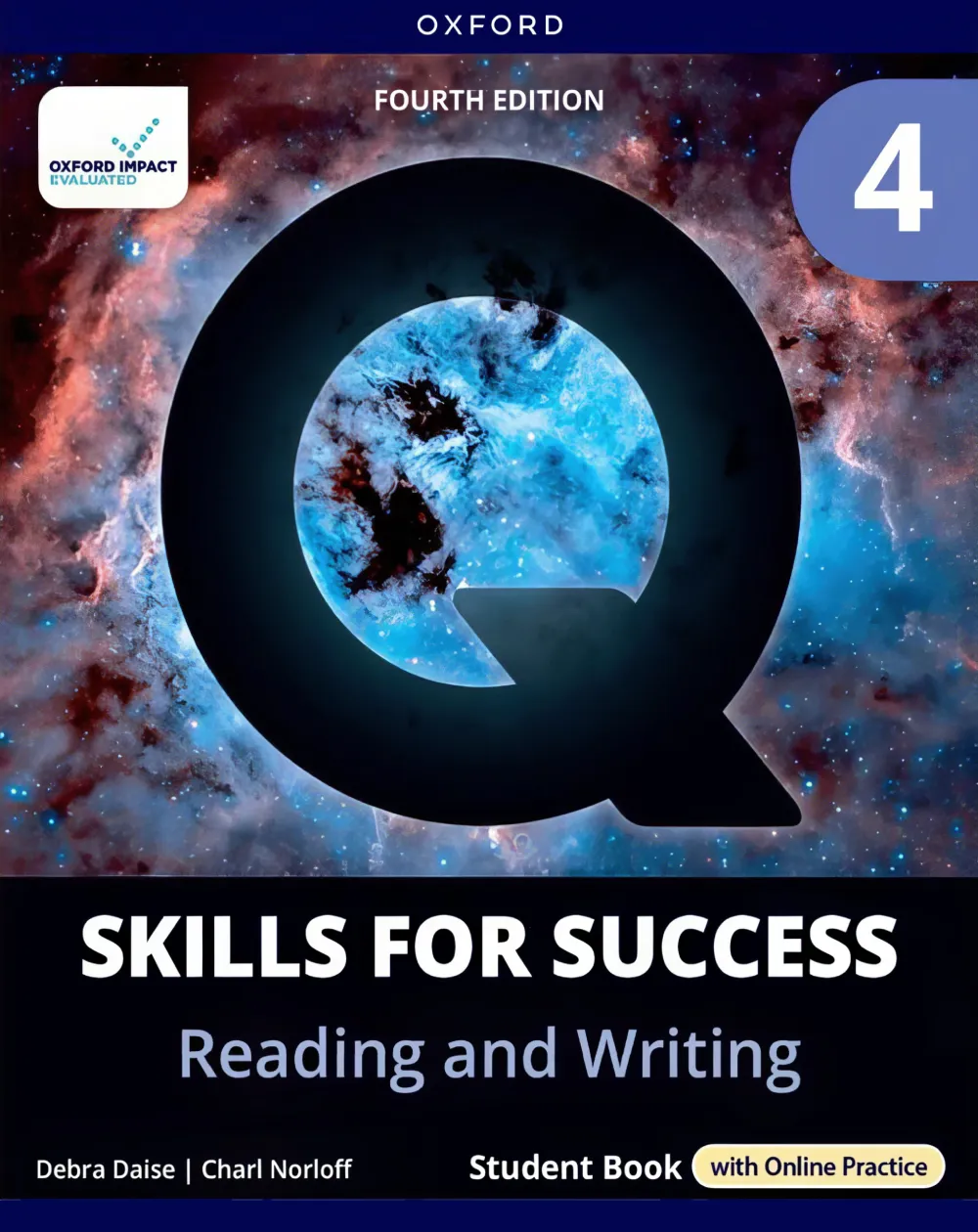
Q Skills for Success 4th Edition 4 Reading and Writing Student Book
Levels and CEFR Range
Q: Skills for Success Fourth Edition covers six progressive levels:
- Introductory Level
- Level 1
- Level 2
- Level 3
- Level 4
- Level 5
Together, the series spans approximately CEFR A1 to C1. This broad range allows institutions to build a coherent academic-skills program from elementary language development to advanced academic literacy.
Because learners often have uneven skills, level selection should not be based only on general grammar knowledge. Reading speed, vocabulary range, ability to understand academic texts, paragraph organization, and previous writing experience should also be considered.
Who Is the Course Designed For?
Q: Skills for Success Fourth Edition Reading and Writing is particularly suitable for:
- University and college students
- English for Academic Purposes programs
- Foundation and pathway courses
- Intensive English programs
- International students preparing for English-medium study
- Upper-secondary learners developing academic literacy
- Adult learners preparing for professional or educational advancement
- Blended-learning and hybrid courses
The course can also support students preparing for academic English examinations, although it is not limited to test preparation. Its broader purpose is to develop transferable skills that remain useful after an examination has been completed.
Benefits for Teachers
The consistent unit structure makes the series relatively easy to plan and teach. Objectives are clearly signposted, and the connection between the readings and final assignment gives each lesson a defined purpose.
Teachers receive support for presenting content, explaining skills, assessing progress, and providing additional practice. Available teaching components may include:
- Teacher’s Guide with Digital Pack
- Teacher’s Digital Pack
- Teacher Online Practice
- Classroom Presentation Tool
- Teacher resources on Oxford English Hub
- Unit, midterm, and final assessments
The A and B versions of tests are especially useful in larger classes or situations where teachers need alternative forms of the same assessment.
How to Use the Course Effectively
The best results come when teachers preserve the connection between reading, thinking, and writing. The readings should not be reduced to vocabulary quizzes, and the writing assignment should not be treated as an unrelated activity added at the end of the unit.
Before reading, students need opportunities to predict, question, and activate prior knowledge. During reading, they should practise a specific strategy. After reading, they should use the information for discussion, comparison, evaluation, or writing.
Writing lessons should also leave sufficient time for planning and revision. Peer feedback is most productive when students receive clear criteria and examples of useful comments. Self-assessment should be used to develop responsibility, not simply as another checklist to complete.
For mixed-ability groups, teachers can vary the level of support. Some students may use paragraph frames, graphic organizers, vocabulary banks, or model texts, while stronger learners can conduct additional research, compare sources, or produce more extended assignments.
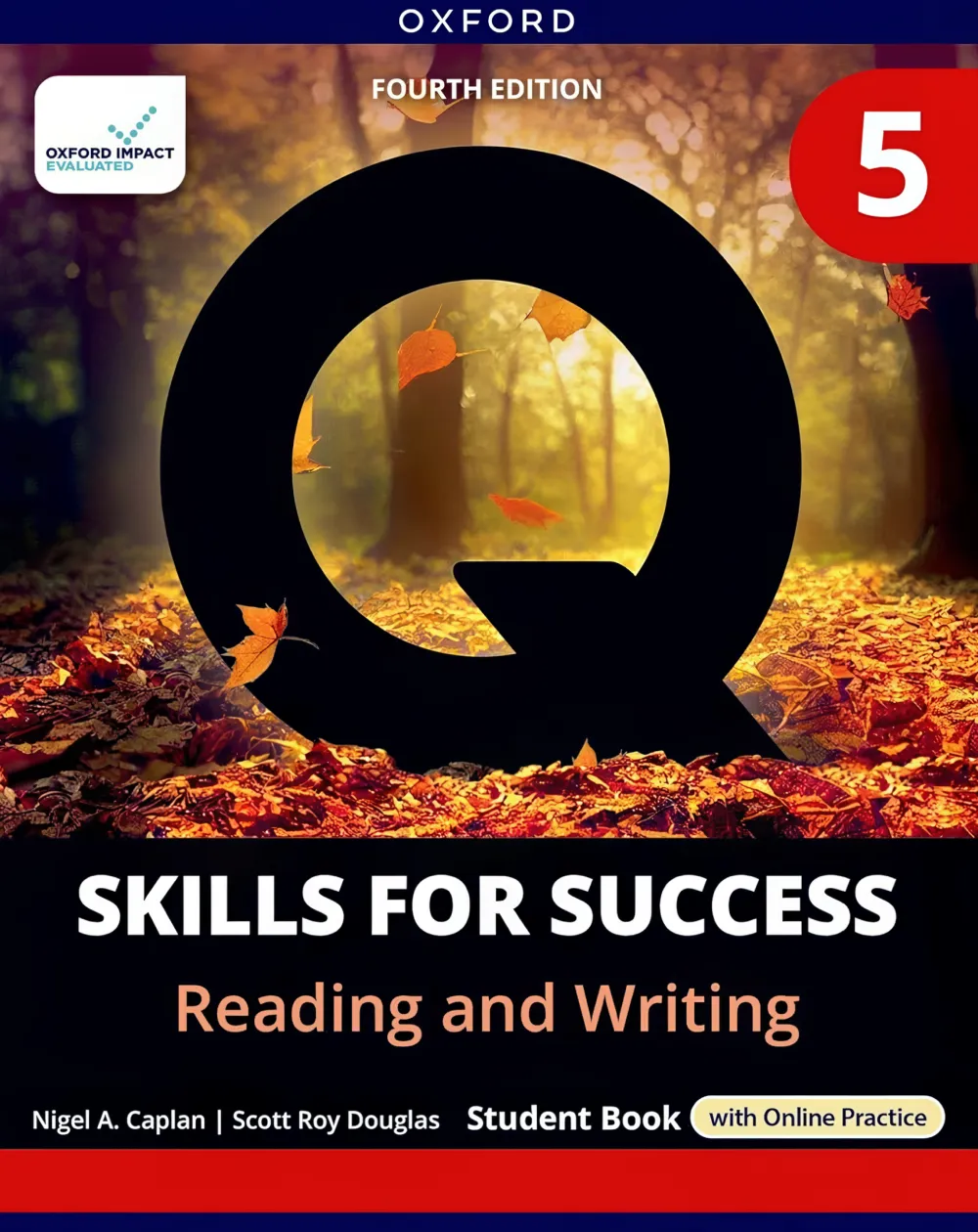
Q Skills for Success 4th Edition 5 Reading and Writing Student Book
Why Q: Skills for Success Fourth Edition Stands Out
Many academic English courses contain reading passages, vocabulary exercises, grammar activities, and writing tasks. What distinguishes Q: Skills for Success is the way these elements are connected around a meaningful question and a clearly defined outcome.
Students read because they need information. They study vocabulary and grammar because they need language for a particular purpose. They think critically because they must decide how to interpret and use ideas. They revise because communication becomes clearer when a text is reconsidered and improved.
The Fourth Edition strengthens this model by adding explicit global skills, stronger professional relevance, improved learner reflection, updated digital practice, and a comprehensive assessment package.
Final Evaluation
Q: Skills for Success Fourth Edition Reading and Writing offers a carefully structured pathway from basic literacy to advanced academic communication. It combines systematic language development with meaningful content, critical thinking, global awareness, and process writing.
The series is particularly valuable for institutions that want more than a collection of disconnected skills exercises. Its integrated design helps students understand why they are reading, how information can be evaluated, and how ideas can be transformed into organized written communication.
For learners preparing to study, work, and communicate in an increasingly international environment, Q: Skills for Success Fourth Edition provides both the English language foundation and the broader learning strategies needed for long-term success.
Frequently Asked Questions
How many levels are included in Q: Skills for Success Fourth Edition?
The complete series contains six levels: Introductory Level and Levels 1 through 5.
What CEFR levels does the Reading and Writing series cover?
The series covers an overall progression from approximately CEFR A1 to C1.
Does Q: Skills for Success use American or British English?
Q: Skills for Success is an American English series published by Oxford University Press.
What is the difference between the two Q: Skills for Success strands?
The Reading and Writing strand develops academic literacy, vocabulary, grammar, critical thinking, and written communication. The Listening and Speaking strand focuses on listening comprehension, pronunciation, presentation, discussion, and spoken communication.
Is grammar included in the Reading and Writing books?
Yes. Grammar is integrated into each unit and selected to support the unit’s final writing assignment.
Can the course be used for self-study?
The Student Book, self-assessment activities, and iQ Online Practice provide useful support for independent learning. However, students generally gain more from the course when they also receive teacher guidance, discussion opportunities, and feedback on their writing.
Is Q: Skills for Success an exam preparation course?
It is primarily an academic English and skills-development course rather than a course for one specific examination. Nevertheless, its work on comprehension, vocabulary, academic writing, critical thinking, and time-efficient reading can support learners preparing for a range of English assessments.
What are the main additions in the Fourth Edition?
The Fourth Edition introduces a new Global Skills curriculum, greater emphasis on professional success, improved learner reflection, upgraded iQ Online Practice, an enhanced Classroom Presentation Tool, and a new assessment package.